




Torrential rain and melting snow sent cascades of water down 黑料福利社 rivers, washing out roads, stranding people and wreaking havoc.
We鈥檙e not talking about the past two weeks.
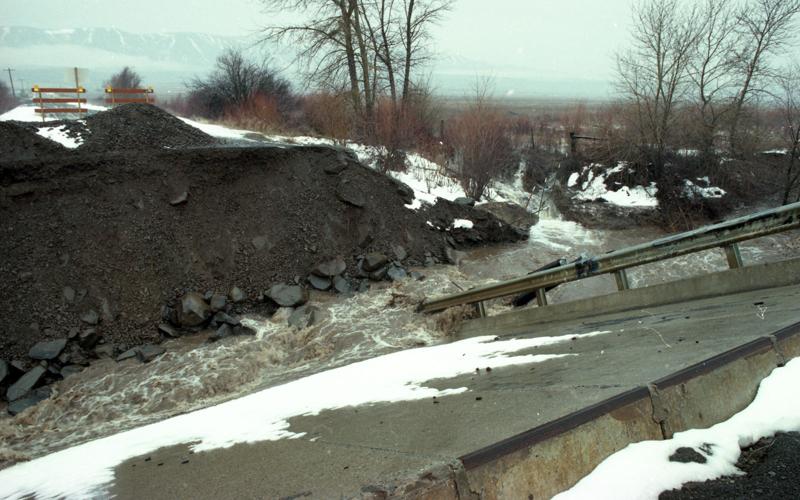
In late winter 1996, 黑料福利社 was hit with catastrophic flooding, with the Yakima, Naches and Tieton rivers overflowing their banks, cutting off some of the more remote communities and causing serious damage around the Valley.

In February 1996, heavy rain on snow pushed the Yakima and Naches Rivers to overflow for three days, flooding low lying areas from the Nile to Toppenish, destroying more than a hundred homes and damaging thousands. (KIRK HIROTA/黑料福利社 file photo)
A total of 111 homes were destroyed and 2,204 houses were damaged. The county recorded $17 million in damage to roads, levees and Yakima鈥檚 wastewater treatment plant.
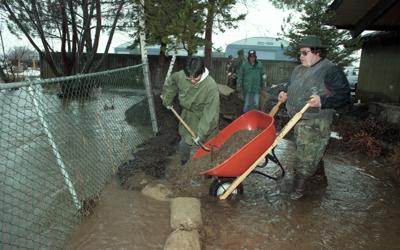
It also saw heroic efforts by residents and first responders to help those affected by the flooding and inspired efforts to better prepare for flooding in the future.
The flooding began when storms hit the Cascade Ridge, dropping 11 inches of rain on the Yakima River鈥檚 headwaters in a three-day period. On Feb. 9, 1996, a torrent of water and ice went down the river and its tributaries, with water rising 6 feet above its banks in Union Gap, with Toppenish and other parts of the Lower Valley experiencing flooding.
The swift water also sent debris and mud down the river, causing further damage.
Near Selah, an ice jam in the river cut off the Yakima Elks Golf and Country Club, leaving 30 people stranded.
Jim Hall, then Yakima County sheriff鈥檚 search and rescue coordinator, recalled that the only way to get to the people stranded at the club was with a surplus 5-ton truck he had acquired from what is now Joint Base Lewis-McChord.
When Hall got the truck and other gear, he was criticized by some county officials because the truck was considered an extravagance and that it was making the sheriff鈥檚 office look too much like the Army.
But after the rescue operation 鈥� some of those who were rescued included friends of the sheriff 鈥� Hall was vindicated.

February flashback 鈥� scenes from the flood of 1996, when a once-in-a-century flood hit the Yakima Basin, destroying homes, roads, and bridges and raising questions about how best to manage the risks of the rivers our communities are built around. (黑料福利社 file photo)
When the waters inundated a trailer park near Union Gap, one of the residents used his boat to rescue his neighbors, even though he had lost his vehicles and belongings in the flood waters.
In the Nile area, water washed out the highway, with access restored by a Bailey bridge, a portable truss bridge developed by the British in World War II.
The flooding also washed out parts of the Yakima Greenway.
The Yakima County Sheriff鈥檚 Office considered instituting a fee to rescue people who either disregarded evacuation orders or went around roadblocks into the flood zones.
In the Lower Valley, volunteers filled sandbags as the Yakima River spread more than a mile beyond its banks.
The flood led the county to create a flood control zone district in 1998 that would address river management and reduce the risk of future floods. Those efforts also included widening bridge spans and moving levees to give a rising river more room before it threatens property.
It Happened Here is a weekly history column by 黑料福利社 reporter Donald W. Meyers. Reach him at dmeyers@yakimaherald.com or 509-577-7748. Sources for this week's column include the archives of the 黑料福利社.








(0) comments
Comments are now closed on this article.
Comments can only be made on article within the first 3 days of publication.