
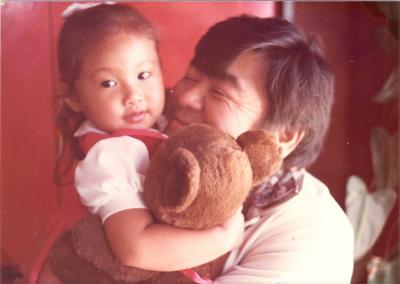
AS A YOUNG BOY, only 10 years old, Taku Nimura stepped off a train and viewed a barren landscape of barbed wire, watchtowers and sagebrush. It would be his home and prison for the next four years.
The year was 1942, and Nimura’s family had arrived at Tule Lake in Northern California, the largest and most notorious of 10 “relocation centers” where some 125,000 Japanese Americans were incarcerated during World War II.
In 2014 Taku’s oldest daughter, Tamiko Nimura, boarded a bus in Olympia on a willing pilgrimage to the same site, now a national monument.
Tamiko’s father wasn’t with her, at least not physically. He died in 1984, when Tamiko herself was 10. But he left behind a rare wartime perspective: 229 neatly typewritten pages describing the searing details of life at Tule Lake. The loose-leaf manuscript stayed in the family’s papers for decades, until Tamiko was ready to address it head-on.
A Tacoma writer and historian, Tamiko has written extensively on the Japanese American experience in the Northwest. But it took her a lifetime to grapple with the most personal history: her own father’s work, life and early death. Their stories are intertwined in her new memoir, “A Place for What We Lose: A Daughter's Return to Tule Lake” (University of Washington Press).
Writing it took 15 years by some measurements — much longer by others, for a daughter frozen by “glacial” sorrow at the loss of her father.
“I've been chasing a conversation with him since I was 10, basically, in different formats and different ways,” she says.
Grief is complicated — as is history.
“Disloyals” hold on to the American dream
On a spring evening in Pioneer Square, Tamiko reads an excerpt from her book at , a subterranean events space and gallery focused on immigrant artists. Just blocks away is the , whose visitors can glimpse unclaimed suitcases stored by Japanese residents incarcerated in the camps after Japan’s 1941 attack on Pearl Harbor.
The Nimura family, tenant farmers in rural California when the war began, didn’t even have that tenuous basement storage. Widespread fear and racism in the U.S. led to President Franklin D. Roosevelt’s authorizing the forced removal and incarceration of people of Japanese descent, two-thirds of whom were U.S. citizens. The Nimuras obeyed orders to reduce their possessions to 500 pounds of material before leaving their homes.
Taku’s memoir describes how, as directed, they destroyed papers, books and belongings with Japanese writings. Baby pictures went up in flames. The family did preserve a few passports and other official documents after much debate, Taku writes — incalculable treasures that few families from that era possess. They’re now scanned into the archives of the , a Seattle-based nonprofit preserving World War II incarceration history.
The family was sent first to the Arboga Assembly Center in Northern California, one of the temporary holding areas where incarcerated people were kept while permanent camps were established, then to Tule Lake. They numbered seven at the beginning: Junichi and Shizuko Nimura, Tamiko’s Issei (first-generation immigrant) grandparents, and their five Nisei (second-generation) children. They were eight by war’s end, as a sixth child was born in the camp. Numbers and symbols suddenly defined them: 25401, their assigned family ID. Their barrack address, Block 45 #A and #B.
Reading their story in Taku’s accounts, “there are terrible parts mixed with wonderful parts,” Tamiko tells the Pioneer Square audience. “Life in camp, the book reminds me, is still life.”
Among the terrible: the initial stay at with Taku describing heat waves so intense they visibly shimmered, overcrowded mess halls and rooms jammed with canvas cots, the humiliation of communal outhouses that overfilled and leaked a gagging stench. Gnats swarmed the living quarters; maggots infested the latrines.
“Nothing seemed to stop the maggots from proliferating and multiplying. I was affected for the rest of my life with recurring dreams of wiggly terrors growing to monstrous sizes feeding on human waste,” Taku writes.
In Tule Lake, there was running water at least, and some semblance of stability. During their incarceration, the family retained traditions like ceremonial mochi-making at New Year’s, with great effort and seat-of-the-pants substitutions. A watering can fashioned from a coffee can and a broom handle made gardening feasible. Adults organized kite-flying contests in the hot, treeless terrain to keep children engaged, an activity so incongruous that Tamiko cross-checked it with newspaper accounts to confirm her father’s memory.
“You create an object for beauty, to set it free or to fly,” Tamiko writes. “The irony, knowing that if you just cut the string, the kite could fly free while you could not.”
The terrible parts worsened in 1943 when Tule Lake added a maximum security “Segregation Center,” bringing in more fencing, guard towers and military police. Tule Lake had become the place for “disloyals” from all camps — people who answered no (or even a conditional yes) to two ambiguous questions on a written loyalty survey.
Tense and fractured, the camp was ultimately placed under martial law, with curfews as stifling as the barbed wire, Taku writes.
At the same time, the U.S. Armed Forces began intensively seeking camp recruits. Taku’s father, Junichi, spoke against enlisting, suggesting incarcerated people should value family over the country that mistrusted and mistreated them. He returned to the barracks one day to find an FBI agent with a warrant for his arrest.
“He spoke in flawless Japanese and explained why my father was being removed. He was classified as a ‘rabble rouser and troublemaker’ and was going to be removed,” Taku writes. “My mother started to cry and Father tried to reassure her that he was not a traitor against the United States. He explained that he was merely following his convictions and then asked the agent, ‘Whatever happened to free speech?’ The agent replied, ‘I am merely following orders to pick you up. I am not here to discuss the philosophy of free speech.’”
Junichi vanished for 18 months. The family received a postcard one Christmas — it’s now in Tamiko’s files — depicting a symbol of justice, the New Mexico Supreme Court building in Santa Fe, one of the cities where he was imprisoned. The words “DETAINED ALIEN” are stamped over his holiday greeting.
Telling stories
After the war, many Japanese Americans remained silent about their traumatic camp experiences, even to their own children, Tamiko writes. Those from Tule Lake often felt particular stigma and shame; the “disloyal” label was complicated both inside and outside their community.
Taku was 14 when his family left the camp. At 20 he was drafted into a different conflict — the Korean War — then attended college on the G.I. bill, becoming a librarian at California State University, Sacramento. He loved books and the arts and was a passionate amateur actor, Tamiko writes. He was also a loving husband to Helen, a first-generation Filipina woman, and an adoring father of Tamiko and her sister, Teruko.
Something still pushed him to record what his family endured. The clarity of his wartime memories might seem strange, he writes, but “I seem to recall that period of my life better than what happened last year.” He submitted the book for publication, unsuccessfully. A single photocopy of the manuscript somehow found its way to the Hoover Institution library and archives at Stanford University.
Rejection from publishers and public silence were common reactions to accounts of incarceration when Taku wrote down his memories, says Shawn Wong, a University of Washington professor who was a pioneer in establishing the field of Asian American literature. Few wanted to revisit the war years or consider a new perspective.
Wong is famous as one of a group that rediscovered the postwar book by John Okada, a 1957 novel about the “disloyals” held at Tule Lake, which sold poorly and quickly vanished.
“Certainly Japanese America did not want to read a novel about a young man who refused to go in the draft and was in prison for two years. That wasn’t the image that Japanese America wanted to embrace in the 1950s after World War II,” he says.
In the early 1970s, Wong and fellow students at the University of California, Berkeley, embarked on a quest to gather all the Asian American literature that existed. (There was so little, Wong says, he assigned every single title in the first college course he taught.) Okada’s widow granted permission to reprint “No-No Boy,” which the students had discovered at a secondhand store. They scraped together the printer’s fee for the self-published new edition by selling advance copies through a Japanese newspaper. Now recognized as a classic, “No-No Boy” has remained in print ever since, published by the University of Washington Press since 1979.
Wong’s career continued to stress preserving once-forgotten works and promoting new voices in Asian American literature. Tamiko’s “A Place for What We Lose” is published under his imprint at the University of Washington Press. The book is something new in camp literature, yet also timely in the age of ICE and President Donald Trump’s immigration detention centers, he says. He was struck by the intergenerational account, and the artistry Tamiko brought to it, a dialogue across the decades.
The librarian’s daughter
Tamiko was a reader as far back as she can remember, a fan of Madeleine L’Engle and L.M. Montgomery and other authors popular among American children. Her father’s manuscript was probably her first encounter with literature of the camps — Taku shared it with her as a child, though she barely remembers the details. The book was titled “Daruma: The Indomitable Spirit,” named for the good-luck dolls that bounce back up when knocked down.
Tamiko tries not to think about the day her father went to the hospital for what was described as asymptomatic pneumonia, possibly an illness caused by renovations at his workplace. She was just old enough to escort her little sister to a birthday party down the street, and returned to an empty home.
She didn’t speak of Taku often after his death — it made her mother cry then, and it still does now — and could not bring herself to visit his grave. She also avoided his book, she wrote, “as I avoided many other things that directly involved his memory.”
Her interests shadowed him, though. She studied literature and American ethnic studies at UC Berkeley. She helped her uncle by marriage, playwright Hiroshi Kashiwagi, write his memoirs, believed to be the first by a “No-No Boy.” After earning a doctoral degree from the University of Washington, she taught other people’s books at a small liberal arts college near her home. She married her high school sweetheart, Josh Parmenter, and they raised their two daughters together.
Then came her own life’s disruption: She was denied tenure, a rejection that upended her life and identity.
Her husband pointed her in the right direction. She had wanted to be a writer as long as he’d known her, he said. Why not do it?
Focusing on race and community and history, she built a new professional life writing articles for organizations and publications from to .
Tamiko jokes that all English professors have an unpublished book in their desk drawers. In her case, that book happened to be her father’s — and a piece of history. In the pain and shame she felt after being denied tenure, she longed to talk with him again. Perhaps, she thought, she could reacquaint herself with his memoir and move it forward professionally — to “succeed my way out of this terrible failure,” she says.
First she approached his book with the eye of an academic, thinking she would simply add a foreword or footnotes. But, she says, his words demanded her perspectives as daughter, descendant and writer. She needed to come to terms with her complicated emotions, and his, even at the book’s end.
Despite the hardships and rejections he’d endured, the last chapter of Taku’s manuscript is hopefully titled "This is My Country.”
“He was trying so hard. He's trying so hard,” Tamiko says. “Like, I'm not bitter. I'm not angry. No, I love America.”
To understand more about what he had faced she needed to take the trip he had not lived long enough to consider: a return to Tule Lake.
A committee has been organizing pilgrimages to the site every other year since 1992. Tamiko boarded the Tule Lake bus in Olympia in 2014. Her aunt Sadako, who attended many survivor gatherings with Tamiko’s uncle Hiroshi, had urged her to come for years, but this was the first time she felt ready.
The bus trip had an uncanny sense of community for Tamiko, with visitors sharing a common background in the same way as combat veterans.
Emerging from the bus, Tule Lake was “dry as an oven,” she writes, a hostile environment where the sagebrush struggles to root in the ground.
Little remains of the camp beyond a latrine’s concrete foundation, and a small concrete jail, built by incarcerated people to hold other incarcerated people. A watchtower has been moved to a nearby museum, which also contains a reprinted directory with the names of all arrivals and departures; the weight of the sheer numbers reminded Tamiko of the Vietnam War Memorial. She sees other Tamikos and Terukos listed, shuddering to think she and her sister and their own children would take their places in a modern-day camp. She finds the eight Nimuras from 1946 and touches their names, “an electrifying act,” she writes.
“In this moment I am the present touching the past. I am the future these names hoped and wished for. I was born because they returned from this place of dust. I am returning even though I have never been here.”
On a lonely road
Public understanding of the camps has shifted in recent decades, including federal hearings that led to the , a presidential apology and reparations to some formerly incarcerated people.
“Disloyals” and resisters are being seen with new eyes too. Tamiko became a force in that perspective, writing text panels for a Wing Luke Museum exhibit about camp resisters and co-authoring with Frank Abe “We Hereby Refuse” (Chin Music Press), an acclaimed related graphic novel and a finalist for the 2022 Washington State Book Award.
Through that modern lens, Junichi Nimura looks more like a statesman than a troublemaker. Taku Nimura, a seer.
Tamiko, telling all their stories, could see it all with the approach of daughter, descendent, writer. And the Tule Lake experience, both on site and after, has helped her reclaim part of her own past identity: teacher.
Tamiko is now a board member of the Tule Lake Committee, a nonprofit preserving the camp’s history and educating the public on the incarceration.
Researching the book, she came across a photo she had never seen before — a boy and a friend standing in the dust of Tule Lake, barracks at their backs. It was the only known image of her father there.
She wondered what she would say to that boy. The answer, two lines, came to her in a dream. She wrote them down.
“You will leave here,” she wrote.
“I will come back for you.”
The conversation, finally, was full circle.
Long legacies
This year , a "book club" of nearly 1,000 libraries from Washington to California that encourages patrons to read and discuss the same book, is featuring actor George Takei’s camp memoir, a graphic novel titled “They Called Us Enemy” (Top Shelf Productions). Takei was incarcerated with his family in Arkansas at age 4; they were later sent to Tule Lake.
Seattle and Tacoma library systems added Tamiko’s book to this year’s recommended reading and programming. Stesha Brandon, who oversees the program for Seattle Public Library, said it was important to hear different perspectives — and, with Tamiko’s book, to see the ripple effects of history: “These kinds of institutional decisions made by the government … have long legacies.”
On a lonely road near Tule Lake, Tamiko writes, a weathered memorial plaque reads “May the injustices and humiliation suffered here never recur.”






(0) comments
Welcome to the discussion.
Posting comments is now limited to subscribers only. or log in using the link below. For additional information on commenting click here.
Log in
Keep it Clean. Please avoid obscene, vulgar, lewd, racist or sexually-oriented language.
PLEASE TURN OFF YOUR CAPS LOCK.
Don't Threaten. Threats of harming another person will not be tolerated.
Be Truthful. Don't knowingly lie about anyone or anything.
Be Nice. No racism, sexism or any sort of -ism that is degrading to another person.
Be Proactive. Use the 'Report' link on each comment to let us know of abusive posts.
Share with Us. We'd love to hear eyewitness accounts, the history behind an article.