
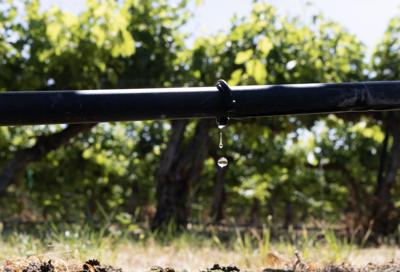
Throughout the 黑料福利社, fall harvests are winding down and irrigation districts are preparing for seasonal shutoffs.
Despite a second straight drought year, we鈥檝e made it through another summer.
But as the YH-R鈥檚 Questen Inghram saw firsthand during a tour of the last week, it hasn鈥檛 been easy 鈥� and it hasn鈥檛 had much to do with luck.
The 鈥� a partnership of seven irrigation districts and the city of Yakima 鈥� organized the tour. Guests included officials from the federal Bureau of Reclamation, the state Department of Ecology and the state Department of Agriculture. The tour took in Valicoff Fruit Co.鈥檚 Wapato packing plant, the Sunnyside Diversion Dam, the Roza Re-Regulation Reservoir and CLS Farms鈥� hop operation near Moxee.
And the tour group got an eyeful: the sophisticated technology at Valicoff鈥檚 packing plant, the new fish-friendly innovations at the Sunnyside dam, the Roza鈥檚 70-foot-deep re-regulation reservoir, and CLS Farms鈥� computer-controlled watering systems and storage ponds.
鈥淓verybody in our industry is doing our part,鈥� fourth-generation grower and Valicoff Fruit Co. President Brett Valicoff said. 鈥淧eople see produce at the store. The hard work and science to get it to them, I think a lot of people are unaware of that.鈥�
Whether people see it or not, all that streamlining is helping Central Washington鈥檚 farmers get by with less water, and that鈥檚 good news for everybody from fish to families.
In addition to keeping the ag business viable, the cumulative conservation efforts of the past decade or more have helped shield the rest of us from the potentially harsh effects of drought years.
Sure, we all see the dramatically low water levels in local lakes and reservoirs, and junior water rights holders in the Yakima Basin had to make do with less than half their usual allotment. But so far, yields are good, most of us can still take regular showers and nobody鈥檚 going thirsty.
Then again, nobody can say with any certainty when, or whether, our water supply might get healthier.
The is forecasting colder and wetter weather from this December through February. The agrees, predicting a 鈥渨et whirlwind鈥� of a winter in 2024-25.
That could mean steadier flows in irrigation canals next year, and maybe a little more peace of mind for people who rely on wells for household water needs.
Such is life in the Pacific Northwest 鈥� or at least, it has been. With the increasing disruptions of climate change, who can say what kind of weather the coming years hold?
Amid all that uncertainty, it鈥檚 good to know local water managers and users are already working on 鈥� and succeeding with 鈥� mitigation measures.


