
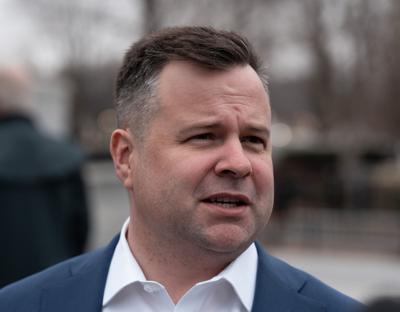
For all the consternation surrounding the choice of Bill Pulte to oversee U.S. intelligence agencies, it鈥檚 hardly the first time the White House has elevated a partisan with few evident qualifications to fill a top national-security post. Congress should insist on a more serious approach to the task of protecting Americans.
Pulte, slated to become acting director of national intelligence next month, is currently head of the Federal Housing Finance Agency, which regulates Fannie Mae and Freddie Mac. Even in that position 鈥� which he intends to keep 鈥� he has acted as a political attack dog, spending much of his time scouring mortgage records for evidence of alleged fraud by Democratic officials. (The cases have gone nowhere, while his actions have triggered a watchdog investigation.)
More to the point, Pulte has no background in national security or intelligence, as would be required by statute for any Senate-confirmed director, and is only now being vetted for a security clearance. For such a consequential position, the appointment is mystifying.
Critics fear Pulte will use the sweeping powers of his position to intimidate the president鈥檚 foes or otherwise misuse the office for political purposes. Although the president has hinted Pulte may not serve for long, he can serve in an acting capacity for 210 days 鈥� enough time to do significant damage to an office that鈥檚 intended to oversee all 18 of America鈥檚 intelligence agencies.
Unfortunately, Pulte鈥檚 appointment fits a pattern in this administration, which has politicized national-security agencies to an unprecedented degree. Defense Secretary Pete Hegseth has fired dozens of senior military officers and blocked the promotions of others 鈥� a disproportionate number of whom have been Black or female 鈥� in what appears to be a partisan campaign against diversity initiatives. Kash Patel, director of the Federal Bureau of Investigation, has used the bureau鈥檚 resources to pursue the president鈥檚 foes. Pulte鈥檚 predecessor as DNI appeared to spend more time investigating conspiracy theories about the 2020 election than coordinating intelligence work.
Such efforts could hardly be more corrosive. The military is being stripped of decades of hard-won experience and expertise, and those losses could grow: Rising officers who aren鈥檛 overt partisans have to wonder whether they should keep chasing promotion or accept better-paying positions in the private sector. As is, repairing the damage done by recent personnel departures could take years.
Intelligence officials, too, have reason to fear being punished or ignored if their assessments clash with the administration鈥檚 narratives. If they come to believe the way to get ahead is to curry political favor, they鈥檙e less likely to head off or challenge bad policy decisions. And more politicized agencies run the risk of being overhauled every time a new administration comes into office 鈥� disrupting continuity and exposing Americans to potential threats.
Although the administration appears to be circumventing the normal nomination process, Congress should still wield what leverage it has to oppose Pulte鈥檚 appointment. Democrats can obstruct legislation that the administration prioritizes. Republicans can make clear to the White House that this fight isn鈥檛 worth having at a moment when voters are focused on ending the war in Iran and bringing down prices. Legislators should also exercise more probing oversight over personnel decisions at the Pentagon and the FBI before morale and recruitment suffer further.
Congress isn鈥檛 directly to blame for politicizing these agencies. But it bears responsibility all the same. After all, keeping Americans safe is its job, too.


