
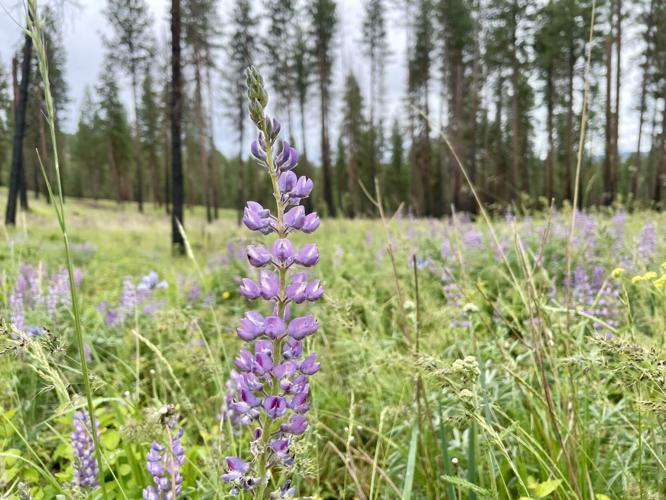
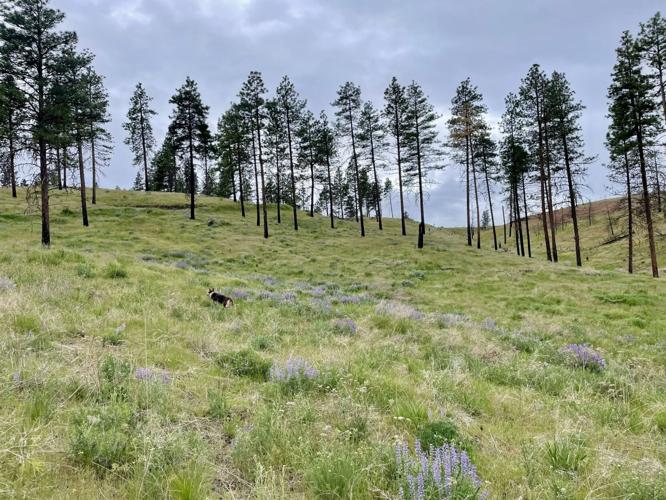
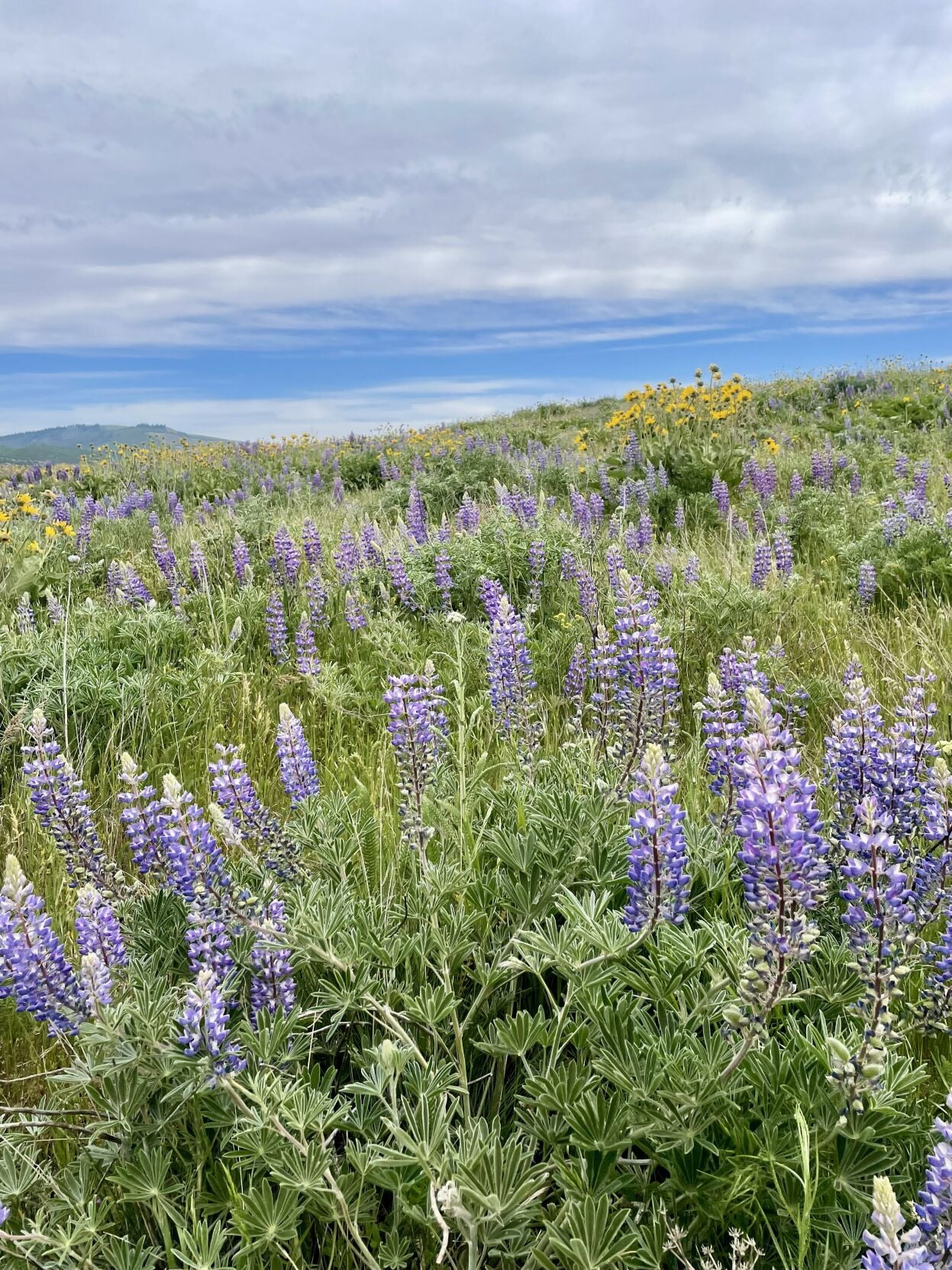
It's hard not to whistle along to 鈥淭he Sound of Music鈥� while driving around central Washington this time of year. The hills really are alive with the sound of music 鈥� the music of wildflowers that is. This is the time of year when it feels like the hills have forgotten that they are in a desert: the sagebrush is soft, the canyon walls are green, and all in a rush it feels like the lupine makes its debut.
At first, it鈥檚 just scattered patches of blue-purple tucked into the grass along a trail or hillside; easy to miss if you are moving too fast. But within a couple of weeks, entire slopes begin glowing violet beneath the open sky. The hills above Yakima, Selah, Cowiche Canyon, Umtanum and the foothills toward Naches start looking a little unreal, as though spring got carried away with the color palette.
Every year, without fail, I am in awe as if it鈥檚 my first time seeing blooming lupine. I become incapable of driving past any hills without slowing down dramatically and 鈥渙ohing鈥� and 鈥渁hhing.鈥�

Take a moment to stop and stare in amazement if you happen across a lupine bloom in its full glory - but please make sure to appreciate from the trail.聽
The species most people are seeing around central Washington are broadleaf lupine (Lupinus latifolius) and bush lupine (Lupinus arbustus), both native to our region. They bloom first at lower elevations in April and May, then gradually move uphill into cooler mountain elevations as summer approaches; through lupine blooms you can follow spring climbing across the landscape.
What I love about lupine is that it somehow manages to look both delicate and unruly at the same time.
The flowers grow in dense vertical spikes that dance constantly in the wind, and when entire hillsides bloom together, the movement is mesmerizing. Add in the low hum of native bees moving between blossoms and a lupine field begins to feel alive in a very literal sense. Sit quietly near one long enough and you start noticing things you would otherwise walk right past: bumblebees vanishing entirely inside the flowers, tiny butterflies weaving through the stems, meadowlarks calling nearby in the sage.
The shrub steppe becomes alive each spring; people unfamiliar with the magic of the steppe sometimes describe it as empty and barren, but it is one of the busiest ecosystems I know once you stop and pay attention.
Lupine isn鈥檛 the exception; it does far more than simply make the hills photogenic for a few weeks each spring.
Lupine belongs to the pea family, and one of the remarkable things about plants in the pea family is their ability to improve the soil around them. Lupine roots host Rhizobium bacteria in their root nodules, which convert atmospheric nitrogen into usable ammonia. This naturally fertilizes the soil and prepares nutrient-lacking soil for other plant life.
In volcanic or heavily disturbed areas (such as the Mount St. Helens blast zone) lupines act as a pioneer species by paving the way for ecological succession. These flowers are not just beautiful; they are actively helping build healthier ecosystems, restoring disturbed ground and contributing to overall resilience of the landscape.
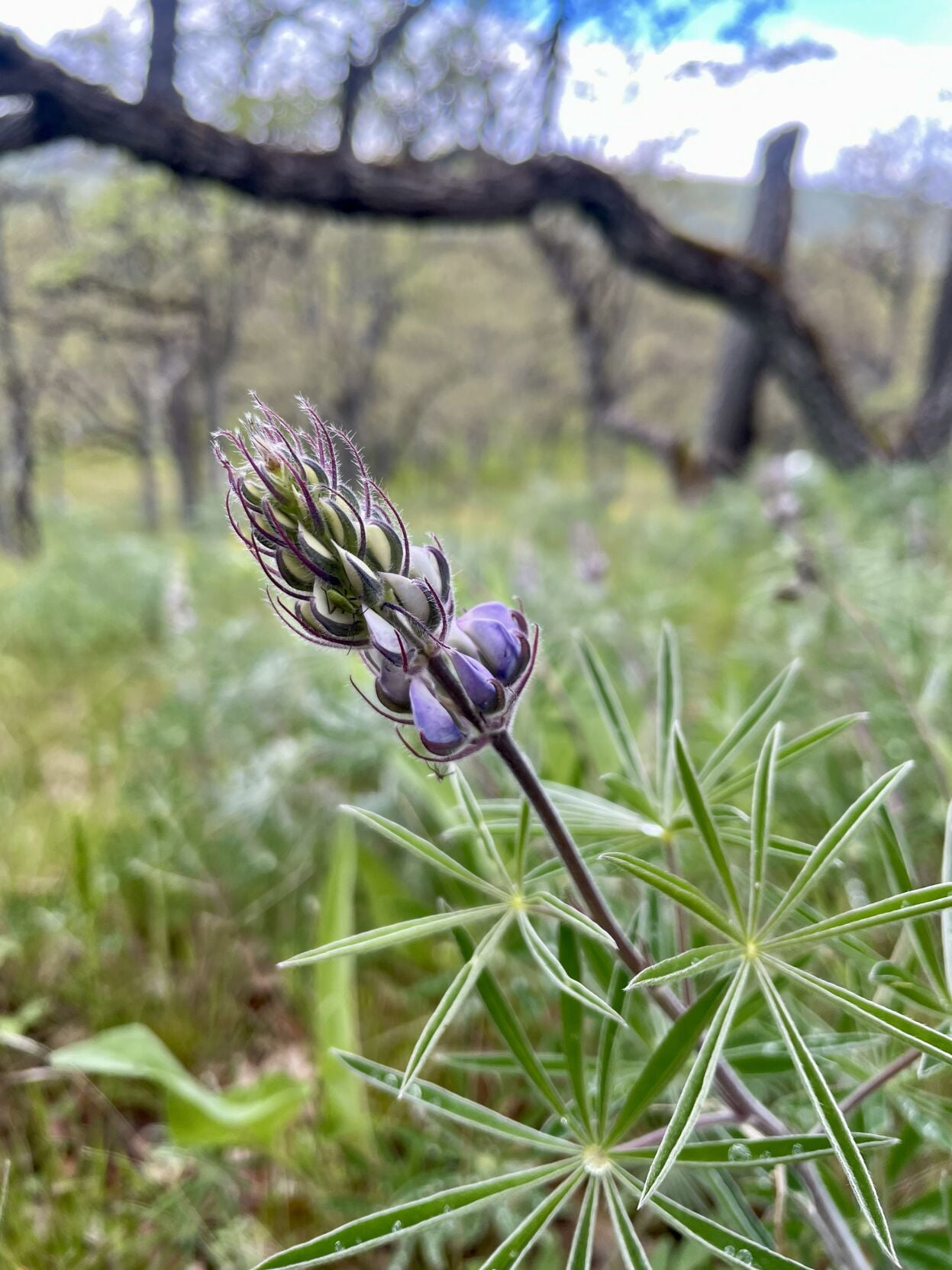
Lupine bloom first at lower elevations in April and May, then gradually move uphill into cooler mountain elevations as summer approaches; through lupine you can follow spring climbing the landscape.聽
Aside from their benefits to the land, lupines also support a huge number of pollinators. These tall nectar-rich blooms are vital for native bumblebees, butterflies and hummingbirds. Several butterfly and moth species rely on lupine as a host for their caterpillars as well.
Lupine also utilize a unique color-shifting mechanism on their petals to signal to insects when nectar is depleted, conserving pollinator energy while ensuring efficient flower pollination.
Despite the resiliency of lupine and other wildflowers, our shrub steppe ecosystem is far more fragile than it appears. The spaces between the flowers are often filled with living biological soil crusts made up of mosses, lichens, fungi and cyanobacteria that can take decades to recover once crushed.
Every spring, people wander directly into fragile wildflower fields trying to capture the perfect photo, which is understandable right up until you comprehend the damage that off-trail wandering can cause. Trampling native vegetation increases erosion and creates opportunities for invasive species to spread.
The good news is that you don鈥檛 need to stand in the middle of the flowers to experience them fully. Some of the best views happen from the trail, where you can see entire purple hillsides rippling beneath an open sky while the wind moves through the grass and wildflowers. There is a quiet magic to sitting near a lupine patch in the evening and just listening and observing; from pollinators, to birds, to the rustle of spring growth before summer dries everything out again.
By July, most of our hills will already be fading back toward gold. The flowers will retreat upward into the mountains and disappear down in the valley. Summer will take over and fire season conversations will begin. We will start squinting at the horizon again, waiting for cooler mornings and the crisp bosom of autumn.
But for right now, for a few impossibly short weeks, the hills are green, the bees are busy, the shrub steppe is blooming its heart out beneath an enormous blue sky. And if you happen to find yourself pulling over on the side of the road because of wildflowers, just know you鈥檙e probably not the only one 鈥� but please stay on the trail while you enjoy the scene.



(0) comments
Comments are now closed on this article.
Comments can only be made on article within the first 3 days of publication.