
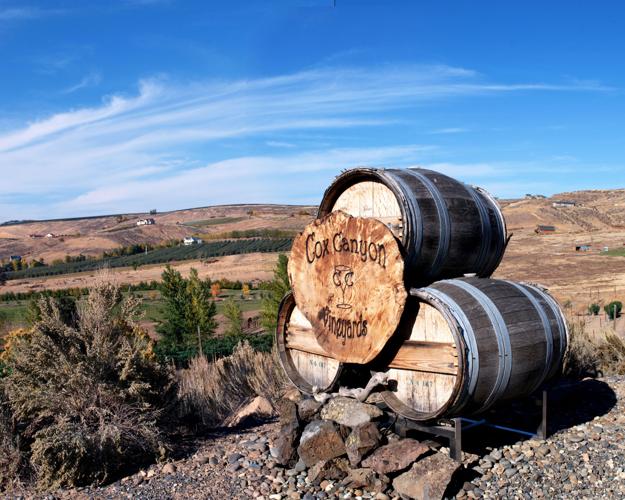
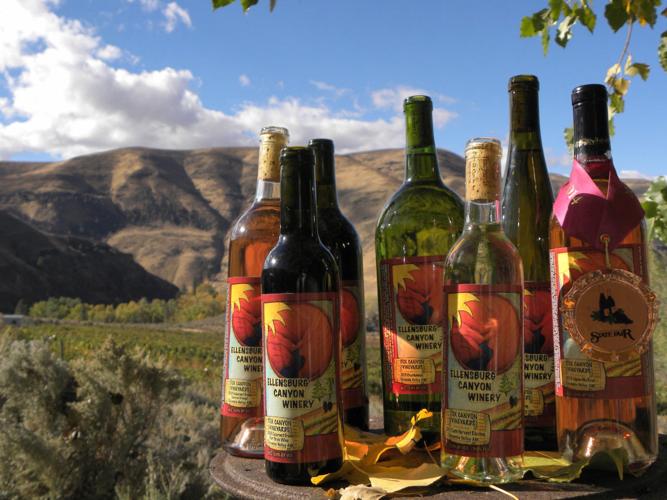
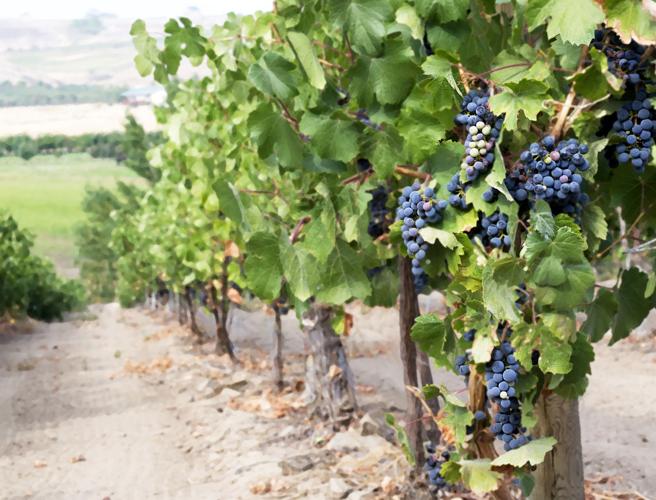
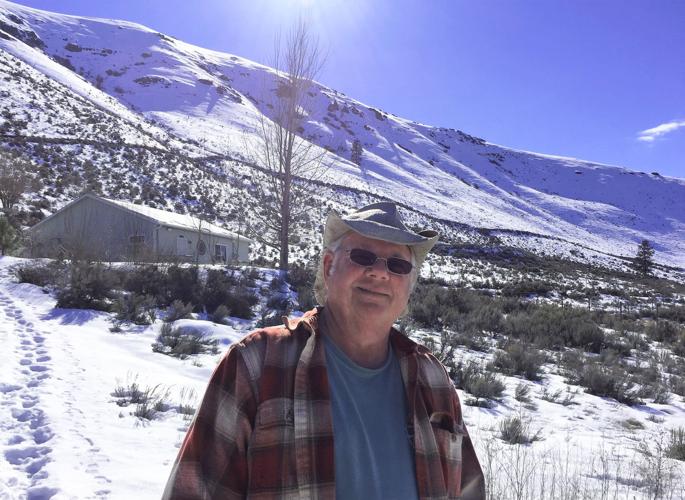
Vigneron Gary Cox started Cox Canyon Vineyards and Ellensburg Canyon Winery in 1999 with a long-term goal of environmental sustainability, becoming the first sustainable vineyard and winery in Kittitas County. A vineyard, after all, can have a lifespan of 120 years. The oldest known vine in the world has been producing grapes in Slovenia for more than 400 years.
In a move toward greater self-sufficiency, Cox recently invested in renewable energy. He had solar panels installed on his property last fall to provide energy for processing his cabernet franc, riesling and malbec wine grapes. His friends at Tieton Farm and Creamery had introduced him to the idea of solar after they installed a solar system last year to help eliminate their power bills. “We have other compatibilities,” says Cox. “They like wine and I like cheese.” So when they told him about their electricity from the sun, Cox not only listened but contacted the system designer/installer at Ellensburg Solar to investigate solar opportunities on his own farm.
Energy and Solar Power
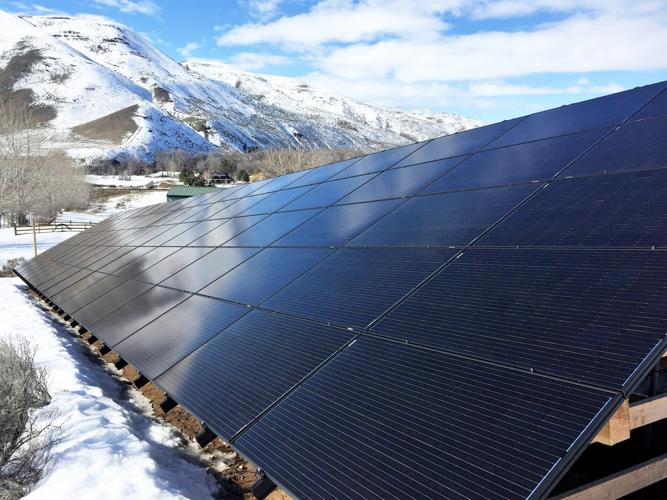
On his 17-acre property, Cox had some space that was unusable for a vineyard. Ellensburg Solar confirmed that it was a great spot for a solar array, and it’s far enough away from the Yakima Canyon rim above the property that it won’t be shaded — for maximum sunlight. The solar field at Ellensburg Canyon Winery now comprises 85 solar panels that help operate winery equipment, irrigation pumps, lighting, and refrigeration. Ellensburg Solar completed the array in October 2016, so it hasn’t seen a full year of production yet but Cox is hopeful.
“Once the costs came down and reliability of the system went up, coupled with generous tax credits from the state of Washington that went into play, it was a no-brainer to go solar,” he says. Once that decision is made, says Jeff Greear of Ellensburg Solar, it takes about a month to install a whole system. Because of federal incentives for renewable energy systems, Cox saved about $15,000 on his system through a 30 percent tax credit. An added bonus: the solar system has no moving parts and is mostly self-cleaning with occasional rain — which makes it ultra-low maintenance.
Conservation and Water
Cox took special care in developing his site above the Yakima River, protecting the ecosystems — habitat, soil, air and water. As rocks were removed during cultivation and planting, they were repositioned within vineyard rows to act as heat sinks during the day, slowly releasing warmth to the vines during the night to facilitate even respiration and sugar production. Vine prunings are mulched back into the soil to encourage mycorrhizal fungus associations to form within the vines, facilitating water and nutrient uptake, says Cox.
He is also a member of the S.H.A.R.E. Pollinator Partnership that supports bees, butterflies and other pollinators. And he practices companion cropping with raspberries, native huckleberries, elderberries, and blackberries.
Fortuitously, this area is not hospitable to pests. The cold, dry winters of Eastern Washington produce temperatures which kill many vineyard disease-carrying pests such as moths, mites and nematodes. The global vineyard villain Phylloxera does not nymph into the winged form of the insect here, therefore localizing outbreaks which are eradicated upon detection, leaving Washington remarkably free of this pest, according to Cox. Due to its arid climate, Eastern Washington is remarkably fungus free, too. As a result, very few chemical pesticides are required (Powdery Mildew being one notable exception), further enabling Cox’s sustainable vineyard practices.
Cox believes that excellent water is essential to good grapes, reminding us that fruit is 95 percent water and therefore the quality of the water incorporated into the grapes is essential to creating a healthy fruit. He is a master watershed steward, a program that focuses on good stream ecology, wildlife biology and protecting water resources through responsible farming practices. The grapes at Cox Canyon Vineyard are irrigated utilizing state-of-the-art, efficient drip irrigation systems fed by the clean headwaters from the Yakima River snowmelt. Cox’s system allows for absolute control, saving water and stressing the vines in a good way. The lack of natural rainwater, the availability of irrigation water, plus solar access sets up a dry, sunny environment perfect for growing wine grapes — and also for cultivating solar power.
His Roots
Cox says part of the motivation for going solar was that he and his wife, Susan, both wanted to become more independent, and installing solar was a great step. They came to the Yakima area because it’s Susan’s home. Growing up in Chicago, he had fond memories of vacationing in the West, venturing as far as Mount Rainier by automobile at a time when they could feed big brown bears from their car windows. He didn’t need much convincing to locate on the West Coast.
As a soil scientist, Gary Cox was hired by the Hanford Nuclear Reservation to study radioactive tumbleweeds. For him, it was the first real demonstration of how plants take up whatever is in the soil — good or bad. He was able to revegetate the burial grounds of waste at Hanford, placing soil on top of the tumbleweeds and then planting with native grasses to stabilize the site. This work set him on a path towards sustainable growing and, eventually, wine production.
As a graduate student, Cox was a “guinea pig,” testing wines for Washington State University’s Professor Walter Clore, considered by many to be the father of the Washington wine industry. “It’s how I got hooked,” he laughs. Later, Cox would be an instructor in the Vineyard & Winery Technology Program at ºÚÁϸ£ÀûÉç College, as well as an instructor in the World Wine Program at Central Washington University.
As a small vintner and proprietor of the 697th licensed winery in Washington, Cox has awards to attest to his success, including three Golds, five Silvers, eight Bronze Medals and an Outstanding/Best Buy from Wine Press Northwest Magazine. Cox also produces hard ciders such as HoneyGal made with Honeycrisp and gala apples, fermented with champagne yeast.
Raisin’ in the Sun
California has more than 100 solar wineries, while Washington has only a smattering, despite the abundance of sunshine in South Central Washington during the summer. Counterintuitively, during the viticultural growing season, Washington averages two more hours per day of sunlight than California, reports the Washington State Wine Commission.
The sun shines here more than 300 days per year, and his vines receive 16 hours per day of sun at the summer solstice. This also increases the temperature, which causes the grapes to mature. Cox says that Washington vines also go through full dormancy in winter, which is unique in the wine world.
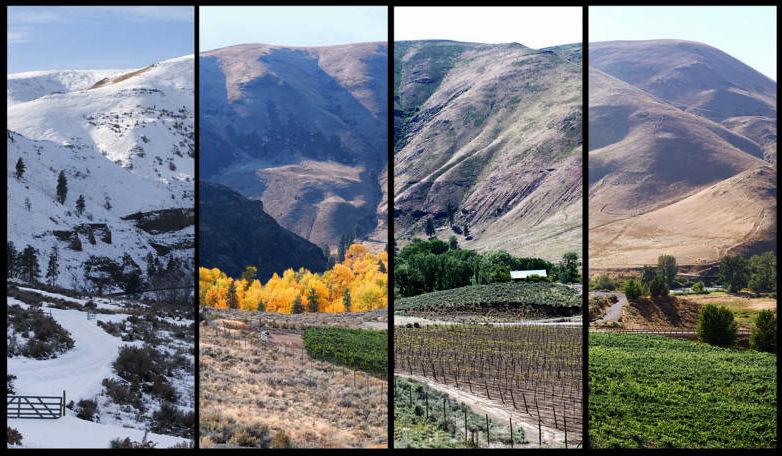
There is up to a 50-degree difference between daytime high and nighttime low temperatures in the Yakima River Canyon, fluctuations that develop flavonoids in the grapes. The soil on his west-sloping site contains layers of volcanic ash from three nearby volcanoes, providing vital micronutrients to the vines.
In Cox’s small slice of paradise, he has what he needs to stay focused on both conservation and high quality grapes – clean water, clean power, clean air, and nutrient-rich soil. As sustainable wine growing gains popularity across California, Virginia, Oregon, Washington and other wine growing states, Cox has nimbly placed his winery and vineyards at the forefront of a solar boom, too. Goldman Sachs predicts the solar industry will to grow by almost 30 percent by 2018, partly due to cost competitiveness and better performing solar panels, along with beneficial policy incentives — the same reasons that drove Cox’s decision to go solar as he anticipates his reduced power bills in 2017 and beyond!


(0) comments
Comments are now closed on this article.
Comments can only be made on article within the first 3 days of publication.