


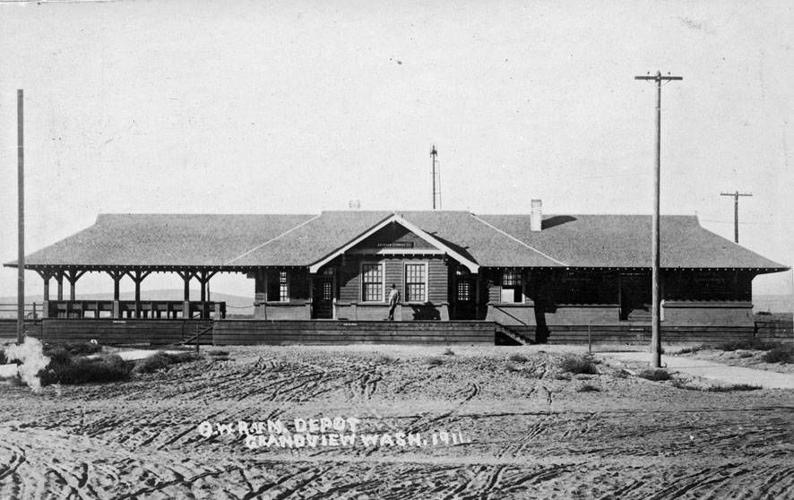

The new C么te Bonneville tasting room in Sunnyside features vintage wine in a vintage building, in beautiful light-filled rooms rich with flavors and history. It was built in 1911 as a train station, and thousands of travelers flowed through it until trains fell out of favor and it sat empty for decades. Winery Owners Hugh and Kathy Shiels decided to save it. They moved it, restored it, and it now has a new life as part of the 黑料福利社鈥檚 vibrant wine industry.
The story of how the historic structure ended up on Edison Avenue in Sunnyside begins in the late 鈥�70s. It was originally the Union Pacific Railroad Station in Grandview. It was one of many depots along the railroad line that ran from Walla Walla to Yakima, and a hub for the citizens of Grandview, says Kathy. 鈥淚n the early days, the train station was the focus of the community 鈥� people would come down to the station and play checkers and wait for their loved ones to come.鈥�
In 1976 her husband, Hugh, who was an orthopedic surgeon, was looking for a spot in Sunnyside to establish his practice. There weren鈥檛 a lot of professional office spaces available at that time, so the Shiels bought the property on Edison Avenue with the intent to build. Then, Kathy says, 鈥淲e heard about this building for sale, and went and looked at it. We loved it, so we decided to move it here and turn it into our medical practice.鈥�
Shiels says it鈥檚 a good thing they were young and optimistic. The old station had been abandoned since 1943 and was in sorry shape. There were squirrels nesting in the attic, the roof was rotten and sagging, and the inside was a mess. The railroad was about to demolish it. Kathy smiles as she sorts through her old pictures. 鈥淚 look at this now, and I think we must have been a little bit nuts.鈥�
In 1980, they moved it seven miles from Grandview to Sunnyside 鈥� a daunting task. They had to cut the building in half, and move it in two pieces so it would fit on the truck. They removed the upper part of the roof, so it could squeeze under power and telephone lines.
They repaired and remodeled it, adding walls inside to create exam rooms. Hugh ran his practice there for 37 years, until he retired. But he didn鈥檛 stop working. By 2001, he and Kathy had established the the DeBrul vineyard, and the C么te Bonneville Winery. It鈥檚 an estate winery, meaning they grow all the grapes for their wine. 鈥淲e really wanted to take it from berry to bottle,鈥� Kathy explains.
Their daughter Kerry started working as their winemaker. Their production was growing, and they needed a tasting room. 鈥淲e looked at this building 鈥� It鈥檚 got a lot of history, it鈥檚 a great building 鈥� let鈥檚 do it!鈥� she says, adding, 鈥淲e believe strongly in the 黑料福利社. This is the birthplace of the (Washington wine) industry and our feeling is we want to bring people here.鈥�
So, they launched a second transformation. They took out all the walls from the little exam rooms, and gutted it. 鈥淚t was a pretty big remodel. Took it down to the studs and built it back up,鈥� Kathy continues. Hugh鈥檚 family has been in the lumber business in Ohio for generations, and the Shiels had all the oak for the cabinets, doors, and beams shipped from there. But Kathy adds 鈥渁 lot of our work was done locally. Yakima Steel did all our steel doors to mimic the freight doors on the outside, and the countertops are from Italstone in Yakima.鈥� The tasting room finally opened last August.
鈥淭here鈥檚 a lot of community pride in the building, even though it came from Grandview.鈥� It is a beautiful space, with high ceilings and walls painted a soft robin鈥檚 egg blue. Old-school white crown moldings and wainscoting glow in the light from the huge mullioned windows on all sides. 鈥淚n today鈥檚 buildings you don鈥檛 find the high ceilings, the big windows, the light 鈥� the light in this building was the first thing that struck the architect,鈥� she adds. 鈥淢ost people who come in here, I鈥檇 say overall their first word is 鈥榃ow!鈥� You feel very comfortable.鈥�
The C么te Bonneville story is about far more than just the building. It鈥檚 about their wines, which are delicious, and have won multiple awards. Their daughter and winemaker Kerry Shiels has a Masters of Science in Viticulture and Enology from UC Davis, and has worked in wineries from California to Australia and New Zealand. They鈥檝e gotten a lot of recognition for a small winery. Their vineyard itself has won multiple awards for the grapes it produces, and one of their wines is still the highest-scoring cabernet wine in the state, Kathy says proudly. Their 45-acre vineyard on nearby Snipes Mountain produces different types of grapes in its various areas or 鈥渢erroirs.鈥� Their signature C么te Bonneville wine comes from their hillside vines. 鈥淐ertain vintages just have a wow factor,鈥� Kathy exclaims.
They produce multiple reds and whites from the same vineyard, which is very unusual. One, a red called 鈥淭rain Station,鈥� celebrates the spirit of the old building. 鈥淲e wanted to hit a price point that was more conducive to a tasting room 鈥� We pour it young, medium body, fruit-forward. Our reserve wines we pour in the other room.鈥� Huge oak doors slide open on barn rails to reveal that room, and a temperature-controlled storage area opposite the tasting bar. 鈥淲e have customers that come to taste from all over the world.鈥�
This winery, like their vines, is rooted here in the 黑料福利社, and very family-oriented. She says Kerry鈥檚 winemaking skills helped them take it to the next level. Fluent in many languages, she knows winemakers from all over the globe. 鈥淪he鈥檚 a perfect person for this industry and it鈥檚 fun to see her flourish in it.鈥� The Shiel鈥檚 son is a Navy pilot, and their other daughter is an engineer. They also help with the winery when they can. They encouraged the Shiels to use modern marketing techniques, and social media. Kathy says at first, she and Hugh balked at some of these new-age ideas, but soon realized how effective they are, and how much their children add to the mix. 鈥淚t鈥檚 not easy working with your kids but in the same token, I figure we鈥檙e pretty darn lucky,鈥� she grins.


(0) comments
Comments are now closed on this article.
Comments can only be made on article within the first 3 days of publication.