
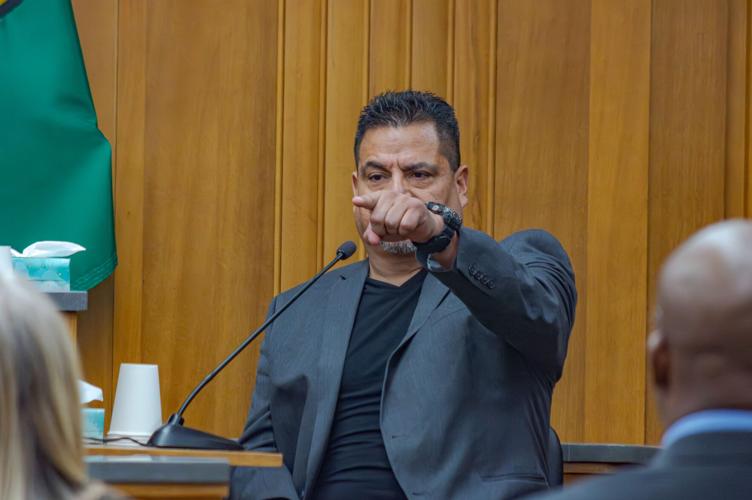
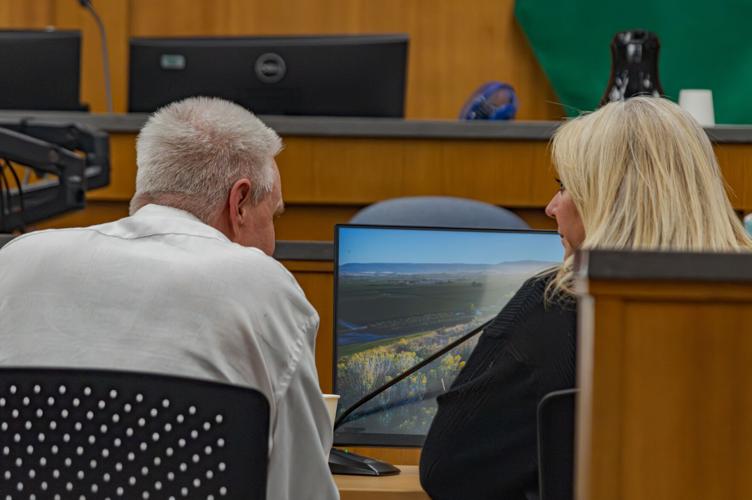

About an hour into Randy Shea Gardner鈥檚 third trial for a 2018 Gleed homicide, his attorney called for a mistrial Wednesday.
Defense attorney Majorie Alumbaugh made the motion after accusing Deputy Yakima County Prosecuting Attorney Richard Petersen of making an inappropriate comment in his opening statement when he told jurors that a guilty verdict was the only 鈥減roper鈥� one they could reach after hearing the evidence.
鈥淚 object to that comment,鈥� Alumbaugh told Yakima County Superior Court Judge Kevin Naught out of the jury鈥檚 presence. 鈥淚t is not a proper thing.鈥�
But Naught, after reviewing the arguments for and against it, said Thursday that he would not declare a mistrial, but said that Petersen's statement was venturing into persuasive speech.
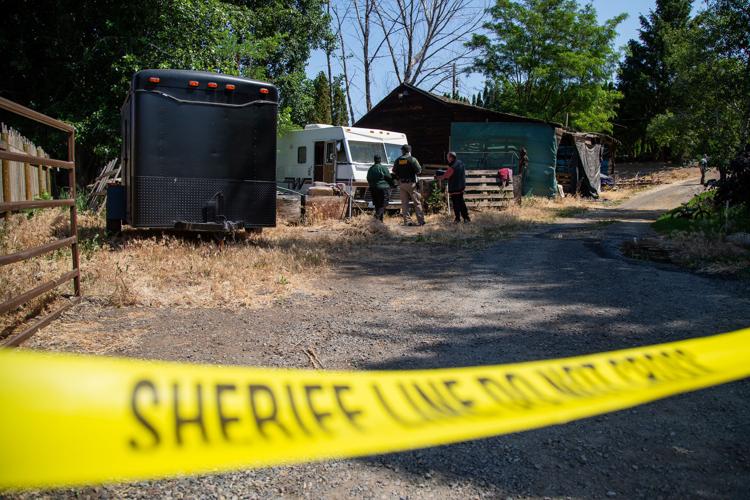
Gardner, 53, is charged with first-degree murder in the shooting death of Julian Wabinga, 45, and second-degree assault and felony harassment. Prosecutors said he threatened another man, Doug Irwin, and forced him at gunpoint to help bury Wabinga in a barn on Gardner鈥檚 in-law鈥檚 property after he shot Wabinga in the summer of 2017.
At his first trial in 2022, Gardner was convicted of all the charges as well as first-degree unlawful possession of a firearm due to his felony conviction for aggravated assault in Utah in 1996.
But that conviction was overturned two years later when a three-judge panel of the Spokane-based Division III Court of Appeals found that deputies ignored Gardner鈥檚 request to have an attorney present when he was first questioned. The appellate court overturned the original conviction and ordered a new trial.
Just before his second trial began in April, Gardner entered an Alford plea on the firearms charge, in which he maintains his innocence but concedes that prosecutors had sufficient evidence to convince a jury to find him guilty. Had the charge gone to a jury, Gardner would have had to admit that he was legally barred from having a gun or prosecutors would have shown jurors Gardner鈥檚 criminal record.
That trial ended with a hung jury, with jurors split 8-4 in favor of acquitting Gardner, one of the jurors told the 黑料福利社. The juror, who asked that his name not be divulged, said his personal thought was that prosecutors failed to prove their case beyond a reasonable doubt.
Third trial begins
On Wednesday, Petersen gave his opening statement to the jury, a day after it had been empaneled. An attorney鈥檚 opening statement serves as an outline for the case that will be presented.
Petersen told jurors that life at Gardner鈥檚 mother-in-law鈥檚 home on the Old Naches Highway in the summer of 2017 was 鈥渇luctuating chaos.鈥� Gardner was living there with his wife and children, and he would invite others he met, including Wabinga and Irwin, to stay on the property, where Gardner was using so much methamphetamine that he would be awake for days, Petersen said.
Jurors will hear from Irwin and Ashley Heether, Gardner鈥檚 now ex-wife, about how on one summer day Gardner, enraged after learning that his truck was impounded while parked on Wabinga鈥檚 property, shot Wabinga, first in the leg and then in the head execution style, Petersen said.
Irwin, Petersen said, will also testify that Gardner pointed the gun at him and ordered him to help bury Wabinga inside a barn on the property, telling him he鈥檇 be killed if he didn鈥檛 cooperate.
Petersen told jurors to pay attention to Gardner鈥檚 recorded interviews in 2017 and 2018, where he said that Gardner gives multiple versions of how Wabinga was killed and how Gardner knew Wabinga was buried in the barn, and compare that with the fact that Irwin and Heether, who were interviewed separately, gave a consistent story.
He said jurors will also get a chance to hear why Irwin and Heether didn鈥檛 report the killing and why Heether pawned the gun that was used to kill Wabinga.
The jurors will also hear from the sheriff鈥檚 detectives, deputies and forensic experts who examined the evidence.
鈥淎fter I presented all that evidence, then I鈥檓 going to obviously ask you to go back to the jury room, consider it, deliberate with each other, work through it and come back with the only just and proper verdict possible in this case: Guilty on all three counts,鈥� Petersen said.
Alumbaugh chose to wait to give her opening statement, as she did in the previous trial.
Defense concerns
In demanding a mistrial, Alumbaugh cited state Supreme Court cases that found prosecutors were inappropriate when they told jurors that their duty was to 鈥渢ell the truth鈥� when delivering their verdicts.
Naught, in his ruling Thursday, noted that his initial instructions to the jury at the start of the proceedings said they were to come up with a "just and proper" verdict after hearing the evidence.
While Petersen's statement suggested that guilty was what he saw as the "just and proper" verdict, Naught said that the comment was in an opening statement in a trial expected to go into next week, and that any impact it had would be dissipated by the time deliberations begin. Jurors are also instructed that lawyer's opening statements and closing arguments, when they sum up the case and say what the believed the evidence showed, are not evidence or the law and should not have a bearing in deliberations.
"A statement like this would be more critical (in a closing argument) than in an opening statement," Naught said.
He said Petersen's statement contained argument instead of merely outlining the state's case. He said Alumbaugh could have raised an objection, and Naught could instruct jurors to disregard that. But, Naught said, attorneys may also not ask for a "curative instruction" because it would draw more attention to the offending statement.
Alumbaugh said she was not asking Naught to give the jury any instruction on that matter.
Detective testifies
One of Petersen鈥檚 first witnesses was retired sheriff鈥檚 detective Sergio Reyna, who was the lead investigator in Gardner鈥檚 case.
Reyna said he first became involved in November 2017 when Gardner, then being held in the Yakima County jail on an unrelated burglary charge, wanted to report that there was a body buried in his mother-in-law's barn. Gardner鈥檚 first question to Reyna was whether Heether was also at the sheriff鈥檚 South First Street office, Reyna said.
Reyna said that Gardner asked for Reyna鈥檚 help in getting out of jail if he provided information on the body.
In the video interview, Gardner said he knew a body was in the barn because he said Heether felt 鈥渁 cold spot鈥� in the barn, and he also said that Irwin, whom Gardner claimed was a drug enforcer, told him Wabinga was buried in the barn. He also said what appeared to be salt on the ground was a sign a body was there.
Reyna contacted the sheriff鈥檚 Search and Rescue team to get a couple cadaver dogs to search the property, but the dogs failed to detect a body. A trainer told him that one of the dogs, which are trained to sniff out human remains, 鈥渨as a friendly dog鈥� and that might have contributed to its failure.
Reyna found himself going back to the property on June 5, 2018, after Gardner called deputies to report the body in the barn and proceeded to dig it up in front of the deputies, who recorded the partial exhumation.
The trial, which began with jury selection Monday, is expected to continue for 10 business days.






(0) comments
Comments are now closed on this article.
Comments can only be made on article within the first 3 days of publication.