
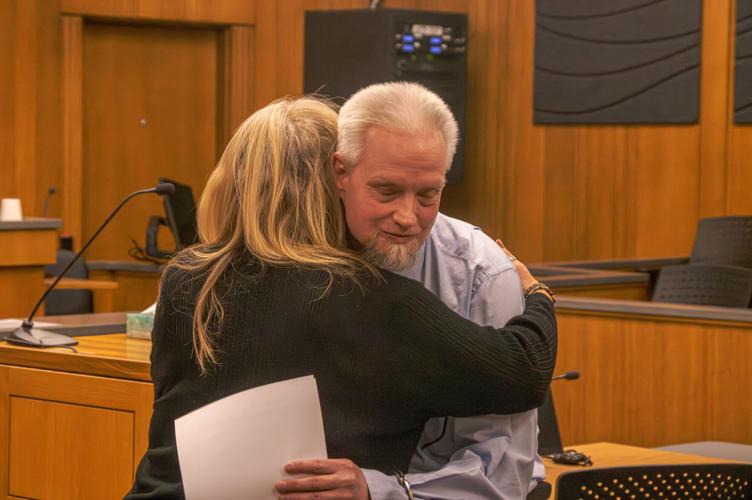
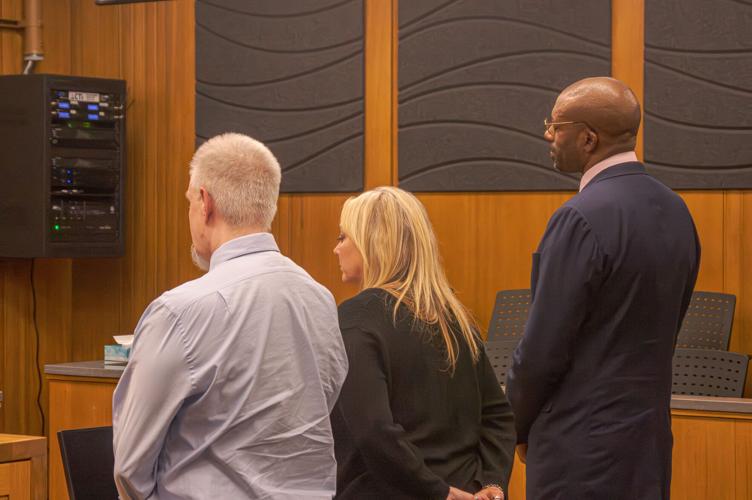

Randy Shea Gardner was found guilty for a second time Thursday of killing a man and burying him inside a Gleed barn.
But jurors acquitted him of threatening to kill another man if he didn't help him bury Julian Wabinga's body.
Jurors, who began their deliberations at 11:15 a.m. Wednesday, announced they had reached a verdict at 1:24 p.m. Thursday, the second day of deliberations in Yakima County Superior Court.
Gardner, 53, was charged with first-degree murder in Wabinga鈥檚 death, and second-degree assault and felony harassment for threatening to shoot Douglas Irwin.
The verdict marked the end of a trial that took nine days with jurors hearing evidence from investigators, forensic experts and eyewitnesses.
Nichole Richter, one of the jurors, said the strongest evidence for her were Gardner's own words.
"It was his interviews (with detectives) and the phone call with his parents from the jail," Richter said after the trial. "There were a lot of inconsistencies."
Prosecutors allege that Gardner fatally shot Wabinga on a summer day in 2017. Wabinga鈥檚 body was discovered June 5, 2018, when Gardner called Yakima County sheriff鈥檚 deputies to the home in the 500 block of Old Naches Highway and began digging up Wabinga.
Third trial
This is the third time that Gardner has been tried for Wabinga鈥檚 death.
In 2022, a jury found Gardner guilty of all three charges and first-degree unlawful possession of a firearm, the latter charge stemming from Gardner鈥檚 1996 aggravated assault conviction in Utah.
The Yakima conviction was overturned two years later when the Spokane-based Division III Court of Appeals found that sheriff鈥檚 detectives ignored Gardner's request for an attorney when they first questioned him. The court reversed Gardner鈥檚 conviction and returned the case to superior court for retrial.
In his second trial in April, jurors deadlocked, triggering a mistrial. A juror told the 黑料福利社 that the jury was split 8-4 in favor of acquittal.
In this trial, Deputy Yakima County Prosecuting Attorney Richard Petersen led off with law-enforcement and forensic experts before bringing on the only eyewitnesses to Wabinga鈥檚 murder, Irwin and Ashley Heether, Gardner鈥檚 ex-wife.
"It was absolutely a tactical decision," Yakima County Prosecuting Attorney Joe Brusic said of the decision to put the physical evidence out front. "We talked about it, and we felt that it was very strategic."
Brusic said he was happy with the verdict, which he said brought justice for Wabinga. He said it was the third time in his 12-year tenure as prosecutor that a defendant was tried three times for the same crime.
Richter, the juror, said the prosecution had not proven the case that Irwin was assaulted. The only evidence jurors had to work with was Irwin's testimony.
Defense attorneys Majorie Alumbaugh and Etoy Alford Jr. declined to comment on the verdict.
Evidence
In his closing argument Wednesday, Petersen challenged Alumbaugh鈥檚 opening statement that the state鈥檚 case 鈥渄oes not make any sense.鈥�
Petersen said each piece of the state鈥檚 evidence, including the eyewitness testimony, is consistent with itself and the premise that Gardner shot Wabinga, even if Heether and Irwin got some details incorrect.
In comparison, Petersen said the statements Gardner made both to investigators and in recorded conversations were neither internally or externally consistent, and that Gardner said things that only Wabinga鈥檚 killer could have known at the time he said them.

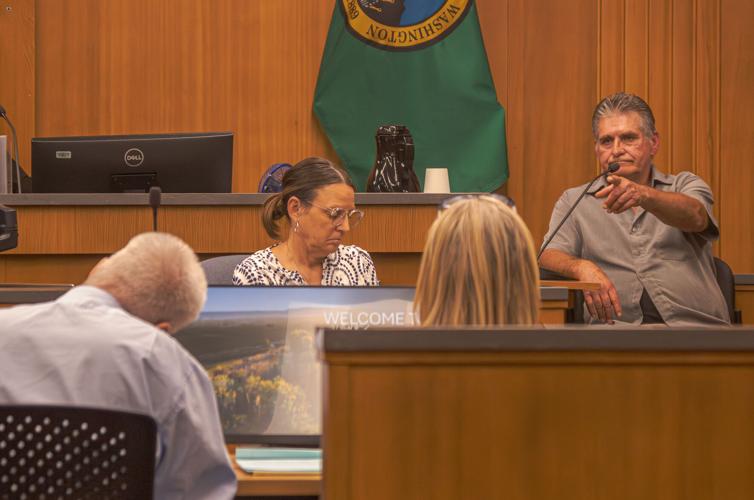
Douglas Irwin points at Randy Shea Gardner in Yakima County Superior Court Tuesday, June 16, 2026. Gardner is charged with first-degree murder in the death of Julian Wabinga in 2018, and second-degree assault and felony harassment after prosecutors say he forced Irwin to help him bury Wabinga's body at gunpoint.
Specifically, when Gardner was digging in the barn, a sheriff鈥檚 deputy asked how far down the body was, and Gardner said a foot-and-a-half. And when he was being questioned later that day, he said Wabinga had been killed with a 9mm pistol, a fact that was not evident until Wabinga鈥檚 autopsy.
鈥淥nly one person on June 5, 2018, knew how far down (Wabinga鈥檚) body was, and it was Randy Gardner,鈥� Petersen told jurors. 鈥淥n June 5, 2018, only one person on earth, Randy Gardner, knew that Julian Wabinga was killed with a 9mm.鈥�
Alumbaugh, in her closing argument, said that Gardner was just showing the deputy how far he had dug down with a rake, not saying what depth the body was at.
Petersen countered in his rebuttal that it was obvious from the video shot by then-Sgt. Robert Tucker that Gardner had not gone down that far and was referring to the depth where Wabinga would be found.
Inconsistencies
Gardner gave inconsistent statements about how he knew Wabinga鈥檚 body was in the barn, Petersen said. In one account, Gardner said Irwin told him that he had 鈥渟moked that fool鈥� and buried him in the barn, while in another statement he claimed that Heether, whom he said had a 鈥渟ixth sense,鈥� felt a 鈥渃old spot鈥� in the barn where Wabinga鈥檚 body was buried.
Petersen said that from the moment Gardner killed Wabinga, he was trying to manage the evidence in the case and pin the shooting on others. When he was brought into the sheriff鈥檚 office in November 2017 after reporting that a body was buried in the barn, the first thing Gardner said was not about the body or concern for Wabinga, but whether his wife was at the station talking to detectives.

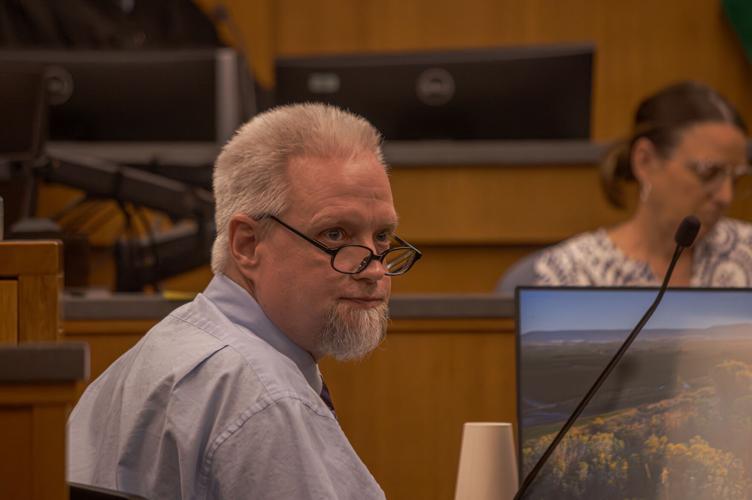
Randy Shea Gardner at his trial on first-degree murder Tuesday, June 16, 2026.
A search by cadaver dogs failed to find the body at that time, which retired Detective Sergio Reyna attributed to the dogs being young and inexperienced.
Heether was in the house on that summer day looking out the window when she said she saw Gardner raise his hands toward Wabinga, heard a shot and saw Wabinga fall in the driveway. She ran back to her bedroom to shield her children from what had happened, she testified.
Irwin, who was invited by Gardner to stay at the Old Naches Highway home without the permission of Gardner鈥檚 mother-in-law who owned the property, said he was working on car wheel bearings and Wabinga was painting a deck when Gardner鈥檚 mother gave him a letter that threw him into a rage.
Gardner then confronted Wabinga and demanded to know why a truck Gardner left on Wabinga鈥檚 Yakima property was impounded. Gardner, Irwin said, shot Wabinga in the leg, knocking him down, and then walked up and shot Wabinga in the head at point-blank range.
Then, Irwin said, Gardner pointed the gun at him and told him he had to help him bury Wabinga鈥檚 body in the barn or he鈥檇 be killed as well.
Credibility
Alumbaugh said that Heether and Irwin were not credible witnesses, citing statements they made that did not line up with evidence. For example, Heether said she saw Gardner and Wabinga facing each other when Gardner first shot him in the leg, while the autopsy demonstrated that Wabinga was shot from behind while walking away, as Irwin described.
Irwin鈥檚 statement that Wabinga was kneeling after the first shot was disproven by the fact that Wabinga鈥檚 thighbone was shattered by the first shot, and that the autopsy showed Wabinga鈥檚 head was against something hard, like the ground, when he was shot in the side of the head.
Irwin also maintained in his testimony in the past two trials that the gun Gardner used to shoot Wabinga had a chrome finish, while the gun displayed in court had a matte finish. Petersen showed Irwin the gun, and he said he did not recognize it.
In cross examination, Alumbaugh highlighted inconsistencies between statements Heether gave early in the investigation and with her testimony Tuesday, such as saying she was worried for her children after Irwin got upset when she told him to leave the property compared with her testimony that she did not view Irwin as a threat. She also pointed out that she told detectives that, since she was a child, she could sense things.
鈥淚f that鈥檚 what the transcript says,鈥� Heether said about the inconsistencies.
Petersen, in his closing statement, said Heether鈥檚 remark about the transcript was not defiance but stating that her testimony was not open to debate.
Gun was sold
Alumbaugh also questioned Heether about selling her 9mm Kimber, the gun Heether and Irwin said was used to kill Wabinga. Heether said she sold it to help pay the high utility bills that Gardner鈥檚 guests created.
鈥淲as it more important to sell your gun and pay for the utility bills than to sell a gun you knew was used in that shooting?鈥� Alumbaugh asked.
鈥淚f I could do it differently, I would have,鈥� Heether said.
Investigators obtained the gun sometime after Heether sold it.
Both she and Irwin denied killing Wabinga or asking anyone to do it. They both said that they did not go to authorities out of fear Gardner might harm them or family members.
Wrapping up
Alumbaugh said the most credible witnesses the prosecution presented were Laura Dolezal, who conducted the DNA tests of evidence at the Washington State Patrol鈥檚 crime lab; Dr. Jeffrey Reynolds, who performed Wabinga鈥檚 autopsy; and Amanda Trickey-Morris, the sheriff鈥檚 evidence specialist who found that stains on a door near Wabinga鈥檚 makeshift grave presumptively tested positive for mammal blood.
Dolezal said there was DNA from three individuals on the gun, but she was unable to link it to any person, and that the blood on the door did not test positive for human DNA, and that a sample from Wabinga鈥檚 tooth clearly demonstrated that he was his parent鈥檚 offspring.
The gun had been sold to another person sometime before investigators obtained it and were able to test it for DNA.
Alumbaugh accused the sheriff鈥檚 investigators on being so focused on Gardner that they mishandled the door, failed to follow up on statements from a Naches couple who went to look at one of the RVs on the property and noticed a foul odor week before Wabinga鈥檚 body was discovered and didn鈥檛 demand more evidence, such as utility bills.
As a result, Alumbaugh聽said detectives failed to deliver justice for Wabinga and his family.
鈥淚t was Mr. Gardner鈥檚 persistence that led to Mr. Wabinga鈥檚 recovery,鈥� she said.
Petersen, in rebuttal, told jurors that Heether and Irwin鈥檚 testimonies were more consistent with the things they testified to years earlier in separate, independent interviews.
He said the discrepancies the defense pointed out did not change the fact that Julian Wabinga was dead and that Gardner was his killer.
kGardner is expected to be sentenced on Aug. 18.






(0) comments
Comments are now closed on this article.
Comments can only be made on article within the first 3 days of publication.