




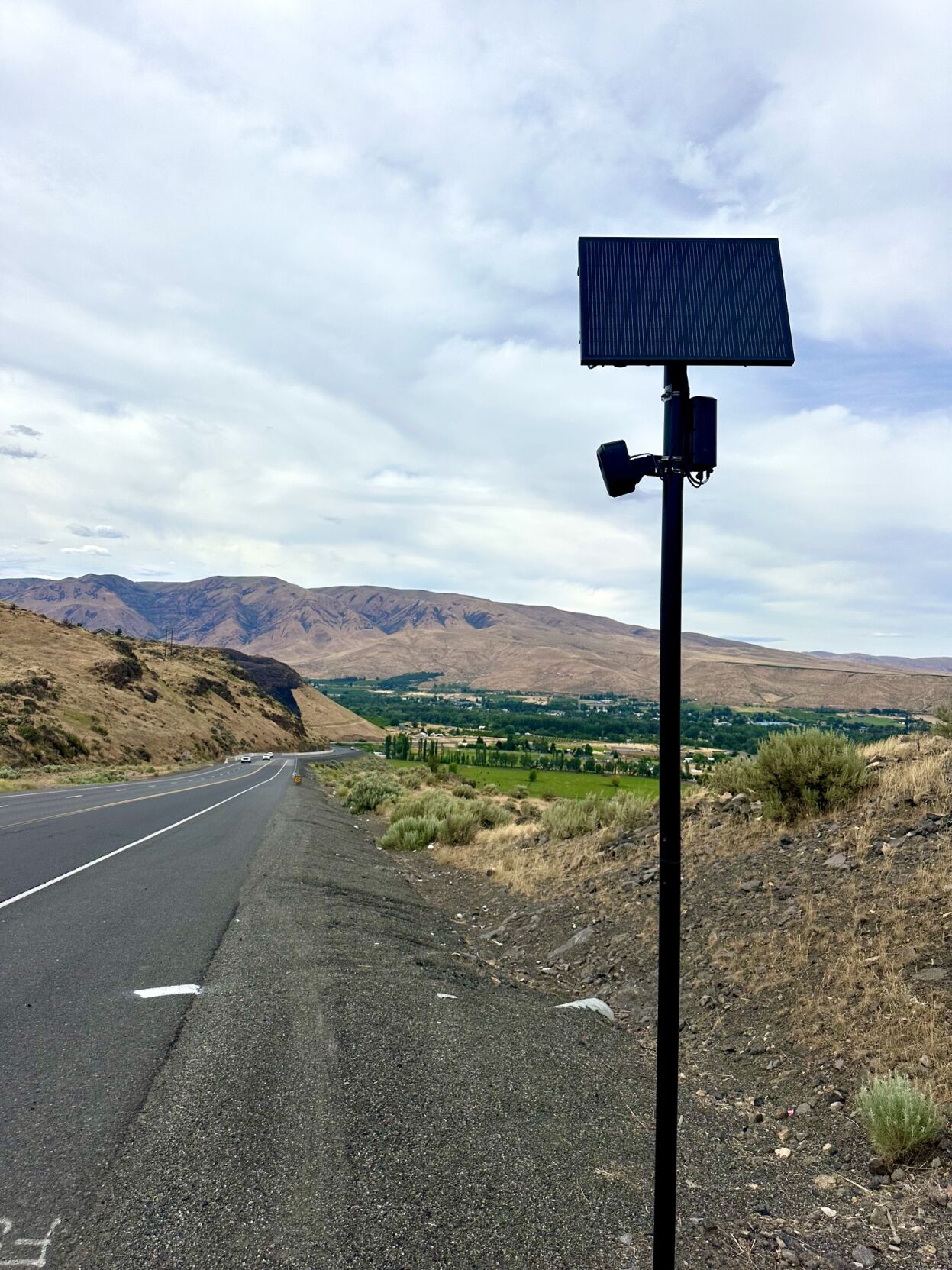
The Tieton City Council voted against putting two new live Flock cameras in the Tieton City Park at its regular meeting June 9.
The Yakima County Sheriff鈥檚 Office offered the cameras to Tieton at no charge, saying they have been proven to reduce crime.
Yakima County Sheriff Bob Udell, who presented at the meeting, said the county has been using Flock cameras for four years. The data is held for 21 days and only law enforcement can access the data, and then only with probable cause and a case number.
Udell said since the Flock cameras were introduced, the stolen vehicle rate in Yakima County has dropped by half. The county has 120 additional cameras available for installation.
Unlike traditional Flock cameras, which capture still images of vehicles and license plates, the live cameras would take video.
According to minutes of the meeting provided by the city of Tieton, council members expressed concern over the fact that the cameras are always on. Udell responded that the video can only be accessed manually with cause.
Udell said law enforcement staffing levels in Washington state are among the lowest in the nation and the cameras help fill a personnel gap. Tieton has three police officers for the city of roughly 1,900, not enough for an officer to be on duty 24/7.
Tieton Police Chief Jeff Ketchum said the two existing security cameras in the park have been used successfully to identify, arrest and charge vandalism suspects.聽Adding two live Flock cameras would have a greater viewing range of businesses that surround the park.聽
Several Sheriff's Office Flock cameras are already up outside Tieton city limits.
Council member Nancy Newberry said there is a big difference between the cameras already in the city square and the ones proposed by the Sheriff's Office: 鈥淭he difference is profound and simple. City cameras are not connected to a national database or network.鈥�
Council member Lupita Carrillo said she recognizes that Flock is a tool that can prevent crime, but is concerned more cameras may prevent people from going to the park.
Newberry said the new cameras would be 鈥渁n inappropriate use of power because our crime rate is absolutely minimal.鈥� She said the council gets regular crime reports from the police department, and crimes in Tieton for the most part are minor, things such as vandalism and domestic incidents.
Council member Ed Marquand said 鈥渋n communities like ours, perception is reality.鈥� He said he thinks local school attendance is down because of ICE fears.
Tieton is predominantly Hispanic/Latino, with as many as 82% of city residents identifying as such.
Six Tieton residents attended or wrote to the council meeting to comment on the issue. Five of the six were in favor of the cameras, with one person undecided.
Joseph Evans was passionate about the subject. He runs Evans Fruit Company in Cowiche, with more than 8,000 acres of orchards and three state-of-the-art production facilities. He said he is all for the cameras and that Evans has 20-30 security cameras聽on its properties.
He said they鈥檝e had theft, assault, and even a murder in the past five years, and he would do anything to support law enforcement. He also stated that 鈥渋n regards to ICE, Evans Fruit has had zero issues with any of our properties or any employees.鈥�
Cathy Hudson wrote 鈥渁nything that will help them (law enforcement) protect our community is a wonderful thing in my opinion.鈥�
Chanc Gufffey also supported the cameras: 鈥淢y kids walk to the park and I鈥檇 rather they be safe when not being supervised by a parent.鈥�
Carmen Rodriguez said she had mixed feelings about the cameras. She has security cameras at home, and the school has cameras. But she said she can see how people would be worried about going to the park.
The council voted 4-1 against the new Flock cameras, with Council member Don Luttrell the only member to vote in favor of installing them.
Council members Nancy Newberry, Lupita Carrillo, Ed Marquand, and Tadeo Saenz voted against them.







(0) comments
Comments are now closed on this article.
Comments can only be made on article within the first 3 days of publication.