


As the Yakima City Council considers renewing a roughly $270,000 contract with Flock Safety, some residents are calling on leaders to let the agreement expire and reinvest in community resources.
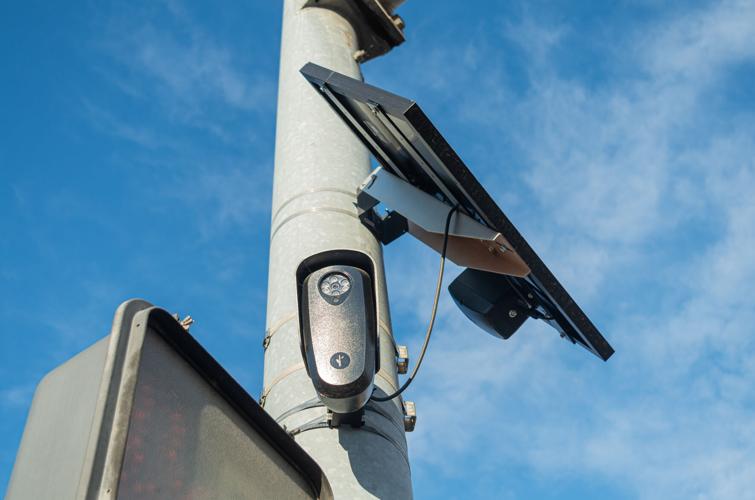
Flock, an Atlanta-based company, makes wireless cameras that scan license plates and identify vehicles based on their make, model, color and other identifying features, providing nearly real-time data on a car鈥檚 location through a searchable database.
Law enforcement officers have praised the technology as a critical tool for fighting crime, but some community members have raised concerns about its implications for privacy, even as the department has implemented stricter rules for use.
At the same time, the council has given the green light for Yakima County to install dozens of new, live video cameras in Yakima as part of a two-year pilot program.聽
Guardrails
Earlier this year, Gov. Bob Ferguson signed , setting new restrictions on who can use automatic license plate recognition technology and for what purposes. Prior to the bill signing, some law enforcement agencies had internal guidelines for ALPR use, but there weren鈥檛 any state-level legal parameters.
The law prohibits ALPR system use, with some exceptions.
Law enforcement agencies can still use an ALPR system to search for a vehicle that has been stolen, is associated with a missing or endangered person, is registered to someone with an outstanding gross misdemeanor or felony warrant or is related to or involved in a felony or gross misdemeanor. They can also compare captured license plate data with data from other state and federal agencies like the Department of Licensing, the State Criminal Justice Information System, the FBI kidnappings and missing persons list, the National Center for Missing and Exploited Children list and the Washington missing persons list.
Parking enforcement agencies and their agents can also use the systems to enforce parking restrictions and identify vehicles for impoundment, and transportation agencies can use the systems to provide real-time traffic information and enforce commercial vehicle systems.
The law aims to address a range of privacy concerns that have emerged over ALPR use over the last year.
Yakima Police Chief Shawn Boyle said the department has changed the way it uses its Flock system since the law went into effect. For example, officers can no longer search for vehicles they think are related to misdemeanor crimes, like petty theft or simple assault.
The department is also limited to a retention period of 21 days, as opposed to 30 days before the law passed. The data can be downloaded and retained for longer than 21 days as allowed by court order in a civil or criminal case or pursuant to a valid, court-issued warrant or subpoena, provided it鈥檚 deleted at the end of the case.
Boyle said the new retention period raises some concerns, since crimes aren鈥檛 always immediately reported and it can take a while to develop a lead on a car or suspect. However, he sees three weeks as a reasonable compromise compared to a 72-hour option proposed in an earlier version of the bill.
Previously, the Yakima Police Department granted out-of-state agencies access to its Flock database. In turn, the department received automatic notifications about stolen vehicles out of state.
鈥淚f an agency partner in California or Idaho called us and said they believe one of their homicide suspects was in our community, we'd help them,鈥� Boyle told the 黑料福利社 in an interview.
That鈥檚 for a couple of reasons, Boyle said: 鈥淲e want to help them solve their crime, but that perpetrator is now moving about our community, which, we want to remove the bad actor from our community.鈥�
Under the new law, the department can still perform a search on behalf of an out-of-state agency, but only Washington state agencies have direct access to the system. Boyle said that means the department is missing some national or out-of-state alerts聽鈥� something for which it's seeking a fix.聽
The new law also prohibits the collection of ALPR data at or immediately surrounding facilities that provide protected healthcare, like abortion clinics, or facilities conducting an immigration matter, as well as at elementary and secondary schools, places of worship, courts and food banks.
Boyle said the department has evaluated the locations of its fixed cameras and has so far moved three of them to ensure compliance with the law. The department has also stopped using six mobile Flock cameras in its patrol cars, since it doesn鈥檛 have a way to automatically turn the cameras off if the car is passing one of the locations protected under the law.
Boyle said he has some reservations.
鈥淪chools are an area where we're not allowed to use them, but if you were to have an active shooter or your child abducted at a school, we may not have the ability to identify the perpetrator based upon not having the ability to use an ALPR,鈥� he said.
However, he sees a portion of the law surrounding public records requests as a positive change.
Last year, a Skagit County Superior Court judge ruled that Flock data was a public record. Critics saw the decision as way of opening a door for anyone to request the data, for any purpose, threatening citizens鈥� privacy. Meanwhile, many jurisdictions expressed concerns that the ruling could lead to an unmanageable influx of records requests.
Boyle said he鈥檚 aware of some individuals who have requested large quantities of Flock data just before the system wiped the information聽鈥� not because they were interested in reviewing it, but because they sought to sue over a Public Records Act violation for monetary purposes.
鈥淯nfortunately, that clogs up the system for people who actually need public records,鈥� Boyle said.
Under the new law, ALPR data isn鈥檛 subject to the state鈥檚 Public Records Act, except for bona fide research purposes.
Contract renewal
The City of Yakima has 87 fixed Flock cameras within the city limits. In total, the contract for those cameras and the associated software is around $270,000 per year.
Within the larger contract are five smaller agreements that expire at different points throughout the year. A roughly $67,000 contract for 22 of the 87 cameras expires June 16. Boyle said rather than renewing that contract individually, the police department is planning on consolidating all five agreements and bringing them before the City Council for approval at its next聽meeting, June 16.
To him, the renewal is necessary to continue to protect public safety in Yakima聽鈥� especially after the department saw a dozen patrol positions cut this year due to budget constraints.
鈥淲hen the police officer can't be on every block, the Flock cameras in 87 different locations help us to be able to identify where criminals are, or in the investigative process, find the car that was responsible for oftentimes a serious crime, homicides to be included,鈥� he said.
But not everyone agrees.
Over the last several City Council meetings, a group of residents has been urging the city not to renew the contract, citing concerns over privacy and noting that the cameras take thousands of images of everyone's vehicles 鈥� not just criminals'. Some have also expressed concerns over potential violations of the Fourth Amendment, which protects people from unreasonable searches and seizures.
Noemi Sanchez is a spokesperson for Yakima Community Aid, a local mutual aid network focused on supporting marginalized communities. The group has an online petition asking the City Council to , turn off all automatic license plate readers and fully divest from Flock. At a council meeting Tuesday, many members of the group emphasized the same desire: for community resources, not surveillance.
The Yakima Police Department has around $285,000 from the general fund allocated for Flock in the 2026 budget.聽At the same time, the council last year approved roughly $9 million in cuts to police, fire, parks and recreation and other services. That included cuts to community spaces like Lions Pool, the Yakima Harman Senior Center and the Washington Fruit Community Center, all of which are being kept open this year through community donations and one-time reserve funds.

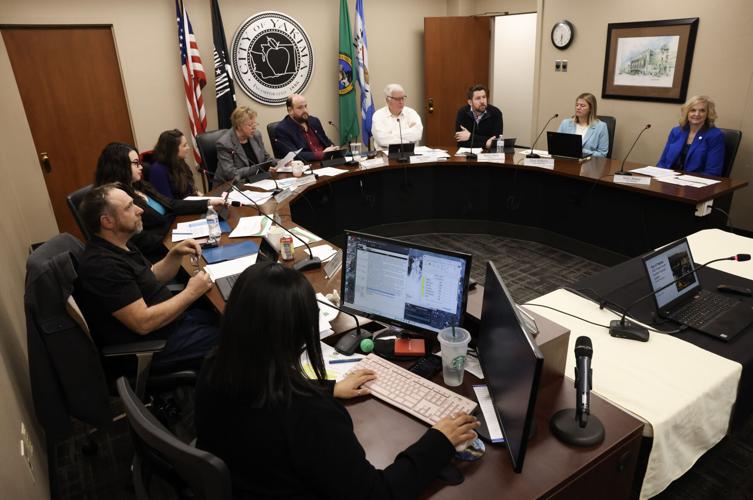
The Yakima City Council is pictured during their meeting Tuesday, Jan. 6, 2026, in Yakima, Wash.
At Tuesday's meeting, Sanchez emphasized that the money going toward Flock cameras could be used for those community spaces instead聽鈥� resources she believes benefit everyone and play an important role in violence prevention.
"When we talk about public safety, we need to ask ourselves, are we investing in systems that respond to violence or are we investing in systems that help prevent (violence) and support survivors?" she said. "Those are two very different things."
Martha Ramirez, a licensed certified public accountant who lives in Yakima, also raised concerns about the finances surrounding Flock, including whether the original purchase of the cameras was an appropriate use of American Rescue Plan Act dollars. ARPA funds were one-time allocations intended for COVID-19 relief, including public health and economic response, premium pay, revenue replacement and infrastructure. Ramirez said she also has concerns about what she sees as "incredibly inadequate" procurement and oversight for an investment that left the city with recurring, subscription-based costs.聽
"A purchase that creates ongoing vendor commitments requires competitive procurement, documented cost benefit analysis and an explicit plan for future operating costs," Ramirez said.
In the past, residents have also brought up concerns about the potential for Flock data to fall into the hands of Immigration and Customs Enforcement. The Keep Washington Working Act prohibits state and local law enforcement agencies from aiding federal civil immigration investigations.
Despite that, an out of the University of Washington found that Customs and Border Patrol had accessed Flock system data from several agencies, including the Yakima Police Department, although the department has repeatedly denied ever knowingly sharing the data and has maintained that it follows the law. The new law that came from Senate Bill 6002 more specifically prohibits ALPR systems from being used for immigration enforcement or investigations.
Sanchez said the alleged violations of the Keep Washington Working Act erode trust and bring into question whether the new law will be followed. While the new parameters are a step in the right direction, she said community members haven't been given a reason to believe they'll be adhered to.聽
The Flock system creates an audit trail that shows who has searched the database and for what reason. Boyle said if a review of the audit showed an officer had misused the system, they would be disciplined聽鈥� but so far, that hasn't been an issue. He聽added that said the city鈥檚 top priority is a safe and healthy Yakima.
While he sees the value of community resources like pools and community centers, Boyle said people need to feel safe enough in the community to go out and engage with those spaces first. He said the cameras are an effective tool for that, pointing out that auto thefts have been cut in half in Yakima since their installation. A new system setup that requires officers to choose from a dropdown menu of gross misdemeanors and felonies before viewing the data also plays a role in ensuring it's being used for the correct purposes.聽
鈥淎LPRs are an effective tool for reducing crime, and I know I've said it before, but if you're not committing crimes, we're not going to be searching for your car, unless you're a victim of something,鈥� Boyle said.
Live video cameras
While the Yakima Police Department looks to renew its contract with Flock for fixed video cameras, Yakima County is also looking to install just shy of 300 live video cameras using $2 million in leftover American Rescue Plan Act dollars.
Once the cameras are set up, the county will embark on a two-year pilot to explore the possibility of establishing a real-time information center at the Yakima County Resource Center, with $1 million of the funding available per year. The idea is for trained staff to be able to use the video footage and other analytics tools to provide real-time information to first responders.
Like the fixed Flock cameras already in use, the live cameras don鈥檛 use facial recognition, and they can鈥檛 replace skilled investigators. However, they can use artificial intelligence to identify people based on features like clothing. For example, the Yakima Police Department has used live cameras to help locate missing children at the Central Washington State Fair and reconnect them with their parents.
As it stands, the city isn鈥檛 on the hook for any of the expenses associated with installation or the two-year pilot. However, if plans for the real-time crime center move forward after that trial period, it would cost the city around $228,000 to install the new cameras, according to a presentation from earlier this year.
At Tuesday's meeting, council member Juliet Potrykus said she's open to seeing whether the live video cameras prove an effective tool for addressing crime. However, she said she does have some reservations from a fiscal responsibility perspective given that the city doesn't currently have $228,000 to put toward the investment.聽
"I'm looking at the time horizon, and I just see two years of free service, but then we would reach a fiscal cliff that I don't believe we can afford to continue without displacing other important services, even including within the police force," Potrykus said.
Council member Felisa Gonzalez also expressed some concerns.
"Between the comments of constituents in my district with concerns about privacy and the lack of long-term planning for funding for the things, I'm having a hard time deciding that this is the best move for us," Gonzalez said.
Boyle told council members that the city or county could secure grant funding to help pay for the live cameras if it decides the technology is a worthwhile investment after the pilot concludes.
"I'm asking for the opportunity to see if this is a valuable tool, and if it is, I'll have to work within my budget to keep it, and if I just can't do that, then I'll come back and sit up here and say we don't have a way to do it, and people in the community can hear from me," he said.
Ultimately, the council voted 5-1 in favor of giving the county the go-ahead to install around 70 live video cameras within city limits for the pilot program, with Gonzalez voting no. Council member Patricia Byers was absent.聽








(0) comments
Welcome to the discussion.
Posting comments is now limited to subscribers only. or log in using the link below. For additional information on commenting click here.
Log in
Keep it Clean. Please avoid obscene, vulgar, lewd, racist or sexually-oriented language.
PLEASE TURN OFF YOUR CAPS LOCK.
Don't Threaten. Threats of harming another person will not be tolerated.
Be Truthful. Don't knowingly lie about anyone or anything.
Be Nice. No racism, sexism or any sort of -ism that is degrading to another person.
Be Proactive. Use the 'Report' link on each comment to let us know of abusive posts.
Share with Us. We'd love to hear eyewitness accounts, the history behind an article.