
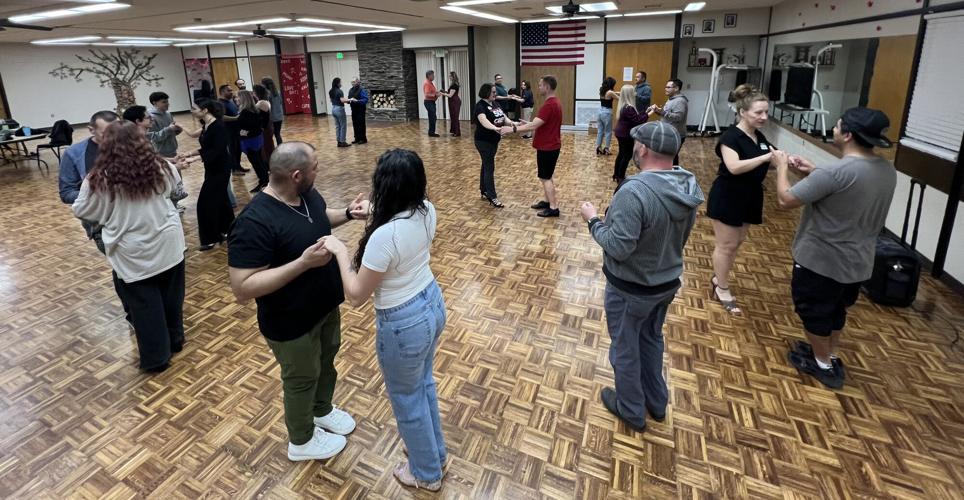
Strains of Latin music float out of the Washington Fruit Community Center on a recent Tuesday evening as people hurry inside, the music serving as a school bell signaling class is about to begin.
Salsa dance class, that is.
For the past three years, 509 Dancers Con Sabor, a local dance club, has offered salsa instruction to anyone who shows up at the center on Tuesdays from 7 to 9 p.m. On one recent chilly night, about 40 people attended. Young and old, working, retired or volunteering, there is only one requirement: Be prepared to dance, whether you鈥檙e a first-timer or a seasoned pro.

According to Wikipedia, salsa is a Latin American dance performed to salsa music. The term dates to 1960s Cuban dance music and includes elements of mambo and son, a late 19th-century dance style from eastern Cuba, as well as American dances such as swing, hustle and tap. Salsa movements may include footwork, arm work, spins, shoulder shimmies, body rolls and hand styling.

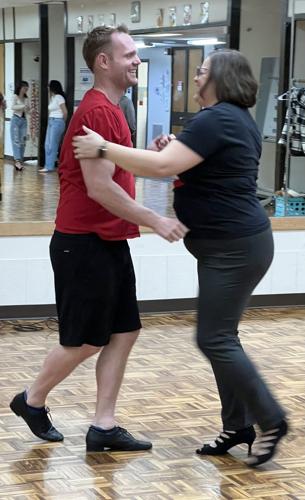
Salsa instructors Casey Sanford, left, and Beth Trudeau of 509 Dancers Con Sabor demonstrate steps for students during a Tuesday night class at the Washington Fruit Community Center.
Getting locals moving are instructors Beth Trudeau, Casey Sanford and Maria Beaudry of 509 Dancers Con Sabor. Weekly sessions at the community center are split into two parts, with the first hour devoted to instruction followed by a more free-form dance party. The only rule for the latter is simple: Find a partner and get on the dance floor.
鈥淲hat we鈥檙e doing here is teaching people to social dance,鈥� Trudeau said. There is no choreography to memorize like what is seen on 鈥淒ancing with the Stars.鈥� Instead, she said, salsa is spontaneous and about responding to a partner and being receptive to leads, or nonverbal signals between dancers.
鈥淚t鈥檚 a lot to learn, but it鈥檚 fun and challenging to think about doing things in a different way,鈥� she said.
Trudeau stressed that Tuesday night classes are open to all levels. Beginners are welcomed and quickly integrated into the group.
One goal of 509 Dancers Con Sabor is to remove barriers such as cost, lack of experience and the hesitation to attend alone. No partner is required, Trudeau said, noting that most participants arrive solo.
For those who do come with a partner, 鈥渨e always ask them to rotate,鈥� she said.
鈥淵ou become a better dancer if you鈥檙e dancing with different people.鈥�
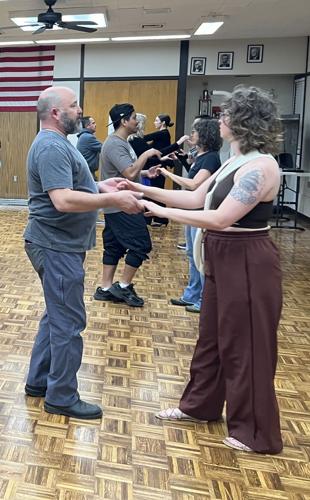
As the clock strikes 7, class begins with warmups common to many forms of dance. Ankle rotations, hip circles and neck rolls help participants loosen up. Dancers then form two large circles, one inside the other, facing each other, while Trudeau and Sanford stand in the center.
Everyone starts with the basic salsa step, with Trudeau calling out the counts: 鈥淥ne, two, three; five, six, seven.鈥� After a few repetitions, the command to rotate sends dancers stepping to a new partner.
Next come turns. Trudeau and Sanford demonstrate, moving smoothly through the sequences. Sanford often adds a flourish, a shimmy or a few toe taps, punctuated by a wide grin.
Instructors also serve as 鈥渟tyle coaches,鈥� encouraging proper form and posture.
鈥淣o droopy arms,鈥� Sanford cautioned. 鈥淒on鈥檛 crumple. Maintain a good frame.鈥� Frame refers to the physical connection between dancers that allows them to move together in harmony.
During a short break, participants shared what keeps them coming back. Charlie de La Chapelle, a retired farmer, said he comes for exercise and enjoys the music. Kara Candid said she was surprised by how welcoming the group was.
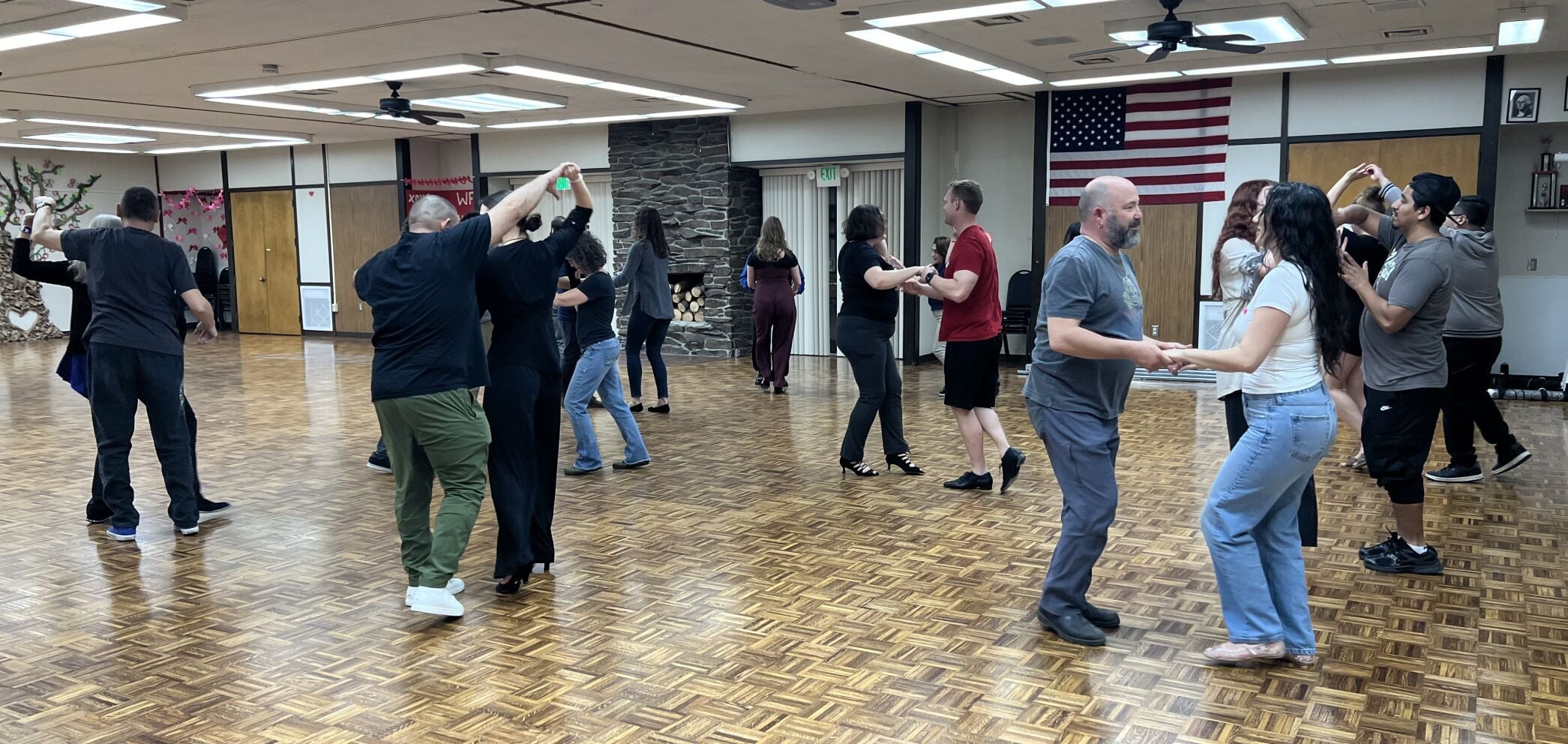
Participants dance during a Tuesday night salsa class at the WA Fruit Community Center, where all they want to do is dance, dance, dance.
鈥淚 expected the class to be full of people who were really good and I鈥檇 be on the outside looking in, but it鈥檚 very welcoming,鈥� she said. 鈥淲e鈥檙e all here to support the beginners.鈥�
鈥淪ix months ago, I was one of them, and now I鈥檓 getting to support the new ones coming in.鈥�
Corrina Michels, a nurse practitioner at Children鈥檚 Village, echoed that sentiment.
鈥淭he salsa dance community is small enough that everyone knows everyone,鈥� she said. 鈥淥ne of the biggest strengths of Yakima is its diversity. Here you make connections with people you might not meet otherwise. Salsa is one of those communities that really bridges that gap.鈥�
Soon, the music signals the start of the dance party. Retired physician Dr. Maria Jorgensen, who volunteers at the Union Gospel Mission鈥檚 medical clinic, is ready.
鈥淚 have to go dance,鈥� she said, hurrying off to find a partner.
Editor鈥檚 note: The Washington Fruit Community Center is scheduled to shut down on June 30 due to lack of funding from the city.



(0) comments
Comments are now closed on this article.
Comments can only be made on article within the first 3 days of publication.