
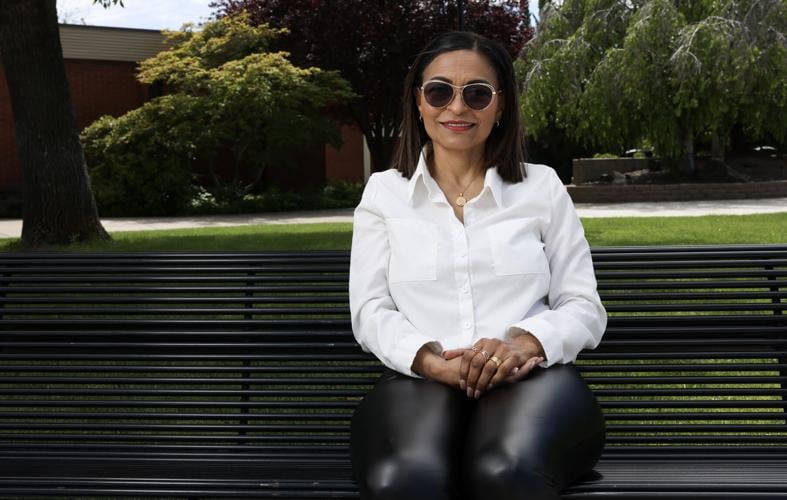
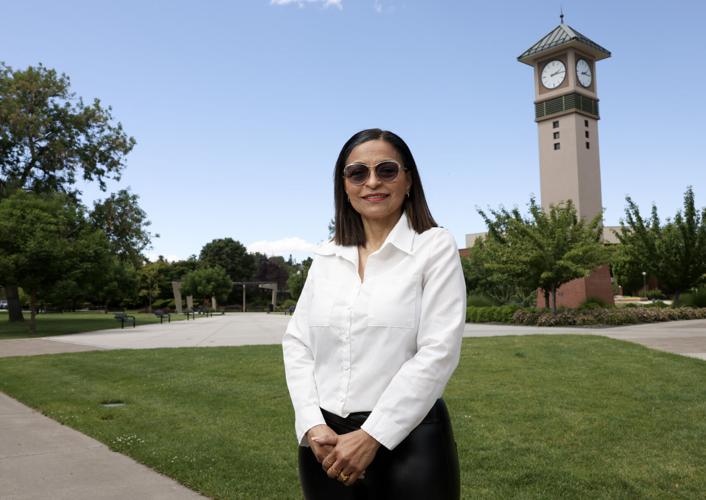

As Venezuela experienced prolonged socioeconomic and political issues, it became increasingly difficult for Yuleyda Garc铆a to stay. The far-reaching challenges extended from her private life to her career, forcing her to make a change.
Garc铆a is from Cabimas, a city on the coast of northwestern Venezuela. Accessing basic necessities was difficult because of low wages and supply shortages, she said.
As a practicing physician in Venezuela for 33 years, Garc铆a saw firsthand how the country's healthcare system was failing its citizens and how people struggled to access care.
She worked in hospital settings and ran her own private practice.
"Public medical care is run by the government, and the government doesn鈥檛 put in the money or maintain the hospitals," Garc铆a said. "When something breaks, it just stays broken and is never fixed."
Private institutions exist, but finances and lack of medical insurance coverage prevent most Venezuelans from accessing those services.
Garc铆a wanted to serve her community as a physician, but that goal progressively became more challenging. In 2023, she immigrated to the United States and will be graduating from 黑料福利社 College with a medical assistant certificate.
Her goal is to continue serving her community, now in Yakima.
"That鈥檚 my greatest pride 鈥� to be 60 years old and to have achieved everything I鈥檝e wanted in my life," Garc铆a said. "And there鈥檚 still more to come."
'I felt like you had everything here'
Working as a physician in Venezuela was tough, but Garc铆a said those experiences trained health professionals to be warriors.
In some ways, they adapted to treating their patients without necessary resources. But the lack of medical supplies, continuous access to water and reliable electricity took a toll on them and the patients.
"We ran a very high risk of causing harm to patients because we had no medicines, nothing, and patients were dying," Garc铆a said.
Patients would often rely on family members living outside the country to send them money, or pool their money so they could pay for tests or medications.
In other cases, physicians would financially support their patients with their own money, or treat the most vulnerable ones for free. But doing that wasn't sustainable.
"We couldn鈥檛 support the whole hospital; that鈥檚 not our role," Garc铆a said. "We鈥檙e not the government; it鈥檚 the government鈥檚 responsibility."
When Garc铆a immigrated to the U.S., one of the first things she did was compare the country's healthcare system to the one in her home.
"I felt like you had everything here: water, electricity (and) basic services," she said.
Physicians in Venezuela didn't have the luxury of running the various tests used in the U.S. In some cases, they were forced to diagnose patients off their words alone.
Immigrating to the U.S.
Living in the U.S. wasn't much of a culture shock for Garc铆a. She said she adapted well to Yakima, where her family was already living.
"I had come before as a tourist when things in Venezuela weren鈥檛 so bad," she said.
Garc铆a received her green card sooner than the average wait time, which can span 10 months to years. Her daughter Fabiola, now 24, was born in Moses Lake and petitioned for her. She said she received her green card in 5 1/2 months.
"I adapted very well to everything: services, community work and sharing my culture with other students," she said.
She knew that she would be here at least five years 鈥� an eligibility requirement to apply for naturalized citizenship 鈥� so she wanted to get involved with helping the community.
Garc铆a continued her journey at YVC. She researched the educational system and took classes before deciding to pursue a medical assistant certificate. She knew that becoming a doctor was out of the question, so she chose the next best thing. Pursuing a medical assistant certificate provided her the opportunity to start generating income, while working with patients as soon as possible, she said.
She has already spent 15 years studying medicine, and obtaining another medical degree at a U.S. medical school would accrue too much debt and take up too much time.
Garc铆a still tries to keep in touch with her roots and loved ones in Venezuela, but her priority is to secure her legal status and guarantee her safety within the U.S.
"My goal has always been to keep that bridge to my home country active while fulfilling the legal residency requirements in the United States," Garc铆a said. "Ensuring a balance between my new life in Yakima and my roots."
Every time she returns to Venezuela, she is filled with energy to keep giving her best in the U.S., she added.
Studying at YVC
The education system in the U.S. was initially confusing for Garc铆a, but she said she's always been passionate about studying.
In Venezuela, she completed residencies in internal and family medicine, later earning credentials in psychoneuroimmunoendocrinology, occupational health and workplace hygiene.
Garc铆a's education in Venezuela translated well to YVC, saying that the community college's coursework was in-depth and demanding.
"Our doctors are physicians by the time they鈥檙e 23, and by 30, they鈥檙e already specialists," she said.
Venezuelans also complete their higher education at little to no cost. Garc铆a's education at the University of Zulia in Maracaibo was recognized during her process of receiving a medical assistant certificate at YVC.
Garc铆a said the hardest part for her was doing the coursework online, but later viewed it positively because she could work and study at her own pace.
Initially, it didn't feel right to her because she wanted to be near patients, and was only able to do so during clinical rotations.
"I took online classes, studied and worked at the same time," Garc铆a said. "I think the program took about a year."
She worked full-time at a warehouse while completing her studies, helping her coworkers dealing with emotional problems.
Garc铆a received a lot of support from financial aid, her family and Yakima nonprofit organization La Casa Hogar, which she considered her second home.
Staying motivated
YVC selected Garc铆a to be the commencement speaker at the 97th ceremony, which will take place Friday.
"I always thought English was my limitation to achieving everything I wanted," she said. "But I always believed that when I want something, I can do it, and I worked very hard for that."
She continued, saying that she will never lose sight of her dream. From hard experiences, people learn to become better.
Garc铆a's passion for helping her community extended to Yakima. She understands the area's need for medical professionals and wanted to get involved.
"I didn鈥檛 come here to be a doctor," she said. "I know I can鈥檛 practice as a doctor here, but I can be a medical assistant, bringing my knowledge while always respecting my role."
In the future, Garc铆a wants to pursue a master's degree in endocrinology or nutrition and continue improving her English. Right now, she's helping her daughter with her own higher education journey.
What she's learned about herself in her journey is her capability to do everything she wants, and that people are the only ones who can set limitations on themselves.
"You have to visualize what you want," Garc铆a said.




(0) comments
Welcome to the discussion.
Posting comments is now limited to subscribers only. or log in using the link below. For additional information on commenting click here.
Log in
Keep it Clean. Please avoid obscene, vulgar, lewd, racist or sexually-oriented language.
PLEASE TURN OFF YOUR CAPS LOCK.
Don't Threaten. Threats of harming another person will not be tolerated.
Be Truthful. Don't knowingly lie about anyone or anything.
Be Nice. No racism, sexism or any sort of -ism that is degrading to another person.
Be Proactive. Use the 'Report' link on each comment to let us know of abusive posts.
Share with Us. We'd love to hear eyewitness accounts, the history behind an article.