




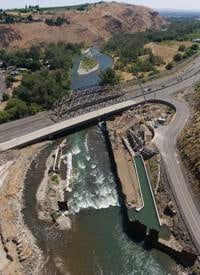


An osprey hovered above the roughened channel hunting for fish as geese waddled along the banks of the Naches River on one April afternoon. Willow saplings sprouted from a patch of gravelly soil between the聽river and Highway 12. Not long ago, a dam stood in this spot.
For Joe Blodgett, a project manager for Yakama Nation Fisheries, what he sees brings him hope. He often goes by the area, as his office has a building nearby.
鈥淚t looks like a river, and it functions like a river,鈥� he said. That wasn鈥檛 always the case.
For about a hundred years, the Nelson Dam diverted water from the Naches River to irrigate the city of Yakima and the Naches-Cowiche Canal Association. Water has been diverted there since 1865.
Officials and community members came together to celebrate the dam's removal in May 2023. Since then, they say the removal has been a success. More work is coming as the second phase of the project begins.
The Nelson Dam was a low head dam, a type of structure that spans the width of a river to raise water levels upstream for diversions, the siphon point for irrigation systems. For a long time, the dam served its purpose聽鈥斅燽ringing water to a growing valley.
鈥淭hat鈥檚 the only way this place has developed聽鈥斅燽ecause of irrigation,鈥� said Mike Shane, city of Yakima irrigation manager. Today, the city serves 10,700 irrigation customers on a system separate from drinking water.
But the problems it caused were too much to ignore. While the Nelson Dam didn鈥檛 completely block the flow of water, it still was a barrier for the fish population, and prevented sediment important for erosion and flood control from naturally continuing down the river.
Years of planning preceded the two years of construction it took to remove the dam and install the new diversion. The effort is just one part of the Yakima Basin Integrated Plan, a collaborative effort involving tribes, environmental groups, governments and irrigators to improve fish passage, habitat protection and water storage in the Yakima Basin.聽
What's next
The second phase of the Nelson Project will begin in the fall, Shane said. It will focus on the confluence of the Naches River and Cowiche Creek.
The Old Union and Fruitvale diversions, which are downriver from Nelson and are partial barriers to fish, will be removed. That water will instead come from the new Nelson diversion. The city has funding for some of the work needed to link the sites by pipe, and hopes to complete part of it this coming fall, Shane said. Officials are looking at grants to be able to fully complete the project.
The dam's removal should also help prevent flooding. Floods in 2017 caused damage in Yakima. During the phase one construction, two side channels were carved into the site to help release river pressure.
Troy Havens, water resources manager for Yakima County, believes that the design has functioned well so far and water has taken to flowing in the side channels.
The hydroseeding of native grasses has not gone as well as hoped, but cottonwoods have naturally started to grow, Havens said. He鈥檚 hoping to see some improvements in plant growth this coming year.

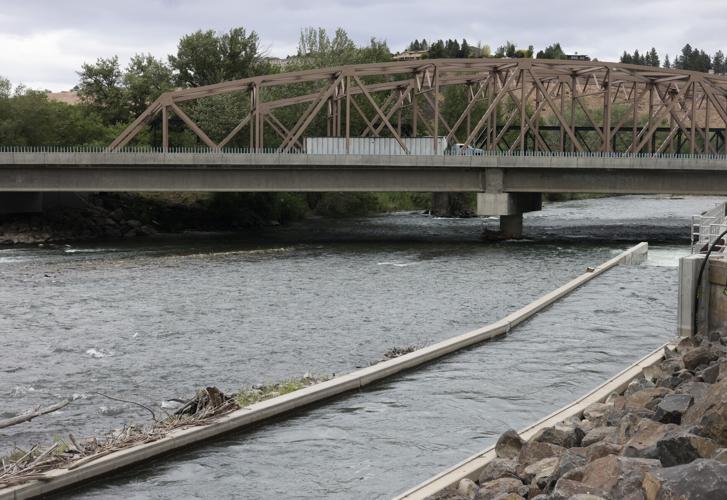
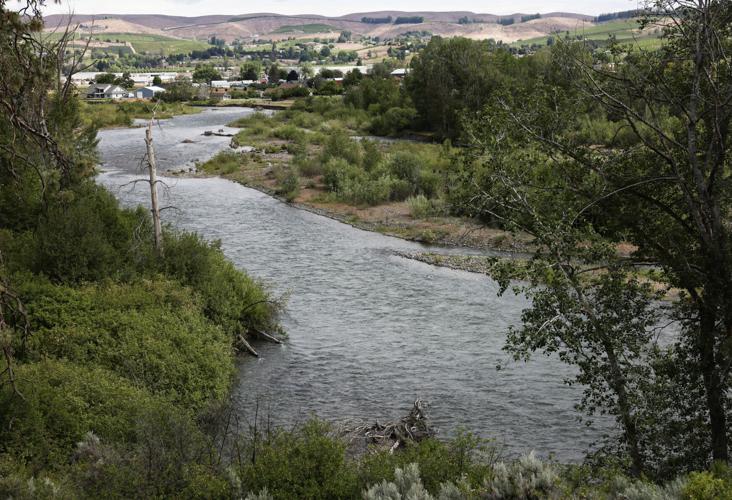
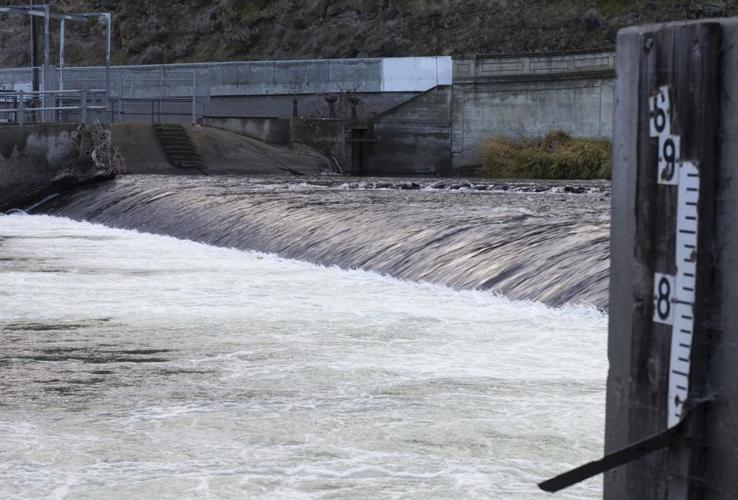
The Naches River is seen flowing toward Yakima from Naches Wednesday, May 22, 2024, near Yakima, Wash. The Nelson dam was removed in this area.
Now, the water diversion can intake water from the side without blocking fish, sediment or boaters, and the former dam site is now a more naturally sloped 鈥渞oughened channel.鈥� The new diversion can also pull water at lower flows.
Another concern was safety.
The dam had an 8-foot drop and the area of recirculation beneath low head dams creates a drowning risk.
鈥淕etting that out of these was a huge safety improvement for recreation,鈥� Shane said. He鈥檚 seen kayakers go through the new roughened channel.
Dam was impacting local geology and biology
No one likely knows what鈥檚 going on at the site at a granular level more than Chandler Sabin, a Central Washington University graduate student. He studies fluvial geomorphology, the study of rivers systems and recently defended his master's聽thesis about the removal of Nelson Dam.
鈥淚t鈥檚 a pretty river, especially in the summer when the leaves are out,鈥� Sabin said.
He visited the site almost a dozen times, spending hours doing research there. Sabin analyzed changes in the river through software using Lidar scans provided by the county and by taking sediment samples at the river.
鈥淭he results show that there is a movement of fine sediments both up and down stream,鈥� Sabin said. That will help limit soil erosion along the Naches, as well as provide better spawning habitat for fish.

The former site of the Nelson Dam is pictured Wednesday, May 22, 2024, in Yakima, Wash.
His study聽was backed by the Open Rivers Fund which also gave funding toward the removal of the dam. The Open Rivers Fund is a part of the Resource Legacy Fund, a philanthropic organization created by the Packard family. There has been a lack of research on the long-term effects of dam removal on rivers, Sabin said. He hopes future graduate students will continue the research work.
Generally, dam removals are considered to be good for fish. Yakama Nation Fisheries does not have monitoring聽at the site, but that could soon change with the placement of a tag sensor, which would track tagged fish that Yakama Nation Fisheries has transported.
Data proving an impact on the population of fish is years away, though. And there are many factors that can cause changes to the population.
鈥淏ut any time you remove a barrier, that鈥檚 going to be an obvious benefit,鈥� Blodgett said.
Bruce Whitmore, a retired Yakima school teacher and Salmon in the Classroom volunteer, has a family cabin dating back to 1911 off the Naches River upstream from the site of the former dam.
He said he's seen more species of wildlife and more bird activity since the dam鈥檚 removal.
鈥淓xpecting a fish to use a fish ladder is like expecting a deer to only walk near where it says 鈥榙eer crossing,鈥欌�� Whitmore said. He鈥檚 happier with the dam gone 鈥斅燼nd believes the fish are too.
More barriers impede fish in the Yakima River
With the success of the removal of the Nelson Dam, Blodgett can鈥檛 help but think about the other barriers to fish in the Yakima Basin, including the Wapato Diversion, the Sunnyside Dam, the Prosser Dam, and the Wanawish Dam on the lower Yakima River.
鈥淭here鈥檚 lots of issues on the Yakima River, and this is one of the first big projects done of this scale,鈥� Blodgett said. To him, it showed that big things can be accomplished in the Yakima Basin and they can be done in a way that is a win-win for everybody involved.
Blodgett said he hopes the level of collaboration between the various agencies will continue, with the Nelson Dam removal project serving as a template.
鈥淭o see this project implemented is really satisfying,鈥� he said.





(0) comments
Comments are now closed on this article.
Comments can only be made on article within the first 3 days of publication.