

Officials heard a series of wide-ranging reports on Yakima Basin water projects Wednesday, from news that the city of Yakima could soon start storing water underground to worries over reservoir projects from Kittitas County residents.
It was the first meeting of the year for the workgroup behind the Yakima Basin Integrated Plan, which developed a groundbreaking effort to address the region's water issues.
In 2013, the Washington Legislature approved the $4 billion, 30-year plan to improve water management in the Yakima Basin through investments in more water storage, fish passage, water conservation and habitat protection. Over the next 30 years, the plan will ultimately be funded by the federal and state governments and local water users.
Led by the federal Bureau of Reclamation and the state Department of Ecology, the plan has the support of the Yakama Nation, state agencies, local irrigation districts, county commissioners and salmon recovery and conservation groups.
But Grant Learned, a member of the Friends of Lake Kachess group, says upper Kittitas County communities have little voice in the process and he's frustrated by the lack of outreach. The group also has been critical of the plan's price tag, following a study by Washington State University scientists showing the water supply projects failed a cost-benefit analysis.
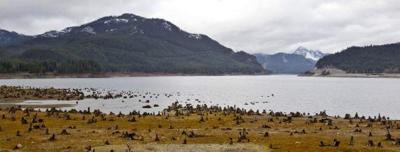
Specifically, the Kachess homeowners oppose the proposal to build a pumping plant that would allow the Bureau of Reclamation to withdraw more water from the reservoir during drought years than it can now. Tapping into that water could keep rivers flowing for fish and crops, but lakeside homeowners worry that it could also lower property values, dry up wells and harm the environment.
It's a $350 million project that could provide up to 200,000 acre-feet of water during a major drought. Refilling the reservoir could take from one to five years, depending on the weather, according to the bureau's studies.
Kittitas County Commissioner Obie O'Brien said the commissioners are planning to meet with constituents to discuss their concerns.
Also in response to those concerns, the Bureau of Reclamation decided to extend the public comment period on the Kachess plan and a separate project to build a pipeline to shift water from Keechelus Reservoir to Kachess that was scheduled to close this week.
Wendy Christensen, Reclamation's lead on the Integrated Plan, said the extension also was needed because of some common misunderstandings about what the projects would entail that were apparent in the comments submitted so far. Public meetings were held in February, but more will be scheduled soon, she said.
While the Kachess and Keechelus projects continue to be reviewed, other Integrated Plan projects are moving forward:
鈥� This week, the city of Yakima received temporary permits to test a system for storing water from the Naches River in the aquifer below the city, which could later be withdrawn and used during water shortages. The city started pumping extra water into the groundwater on Tuesday, said Dave Brown, the city's water and irrigation manager. The final permits are expected this fall, he added.
鈥� The plan to raise the Cle Elum Reservoir several feet to create extra storage capacity is in the final design phase. Reclamation and the Forest Service are working with about 40-50 lakeside landowners on plans to protect their shoreline from erosion when the water level rises, and work could start as soon as Congress approves funds for the project.
鈥� Construction is expected to start this fall on an access road and bridge just below Cle Elum Dam that is needed for construction of the planned $100 million fish passage facility.
鈥� Computer models have been developed to look at how the proposed water storage projects contribute to the plan's goal of providing 70 percent of water supply to junior rights holders during drought years and improving stream flows in key fish habitat.
This year, the water supply is expected to be 73 percent for junior rights. The shortage is the result of the warm weather this winter causing most of the precipitation to arrive as rain, not snow, even though the total precipitation was normal. The region's reservoirs aren't large enough to hold all the rain and winter runoff, so typically the snowpack has served as an extra reservoir.
The current conditions show why the basin needs the additional water storage capacity that the Integrated Plan calls for, several members of the workgroup said at the meeting.









(0) comments
Comments are now closed on this article.
Comments can only be made on article within the first 3 days of publication.