


Editor's note: This column was first published Jan. 11, 2021. It has been updated to adjust for inflation -- and the new year.
While we're still getting used to writing "2026," one Yakima County city is quietly marking its 115th birthday.
On Dec. 31, 1910, Zillah residents gathered at the Modern Woodmen lodge hall to incorporate the town, with a vote of 94-6 in favor. Yakima County commissioners certified the results on Jan. 3, 1911, with the secretary of state filing the incorporation documents on Jan. 5, 1911, officially recognizing the new town.
But Zillah鈥檚 history started nearly two decades earlier, thanks to Walter Granger.
Granger, president of the Yakima Land and Canal Co., was building the Sunnyside Canal that would open the Lower Valley to agriculture and development.
The company was a partnership with the Northern Pacific Railway, which was looking to develop its land grants in the Valley.
What is clearly known is who Zillah was named for, but why is not exactly clear.
The community鈥檚 namesake was Zillah Oakes, who in April 1892 was the 19-year-old daughter of Thomas Oakes, president of the Northern Pacific. She accompanied her parents and Granger on a scouting trip to look for potential town sites.
One version of the story said that while crossing a stream, the party鈥檚 wagon tipped over, and to pacify the upset teen, Granger offered to name the townsite for her.
Other accounts suggest that Granger or another member of the party decided to name the city in honor of the youngest member of their party. It probably didn鈥檛 hurt that her father was also the largest investor in Granger鈥檚 company.

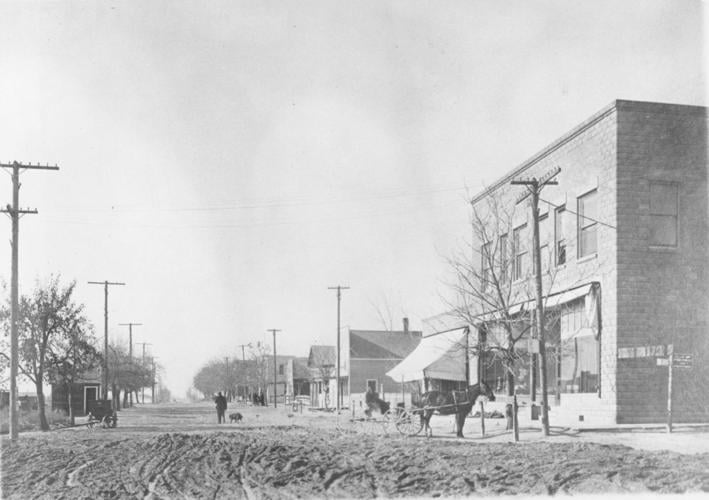
An undated photo shows a street scene in Zillah.
A few weeks later, Zillah got its first business, the Zillah Hotel, which was built by Reuben Hatch. Granger鈥檚 irrigation company also established its headquarters in the community, followed by a general store, drug store, hardware store and a blacksmith鈥檚 shop.
In its first year, the community鈥檚 population was about 50.
In 1894, a school district was organized and the first schoolhouse built, at a cost of $2,200 鈥� about $81,058 in today鈥檚 money.
In addition to the businesses, the community also had farms, fed by water from Granger鈥檚 canal.
By 1910, the community was ready to incorporate. The residents filed a petition with the county, and commissioners decided to proceed with the incorporation, but only after trimming back the town鈥檚 boundaries.
The voting was done at the lodge hall as it was the largest place that could accommodate the group.
In addition to approving incorporation, the voters also voted for the town鈥檚 officers, who ran unopposed on the 鈥淐itizen鈥檚 Ticket.鈥� E.J. Jaeger was elected mayor, with J.P. Fox, C.M. Mudd, J.E. Townsend, A.A. Hunter and W.B. McDonald as council members.
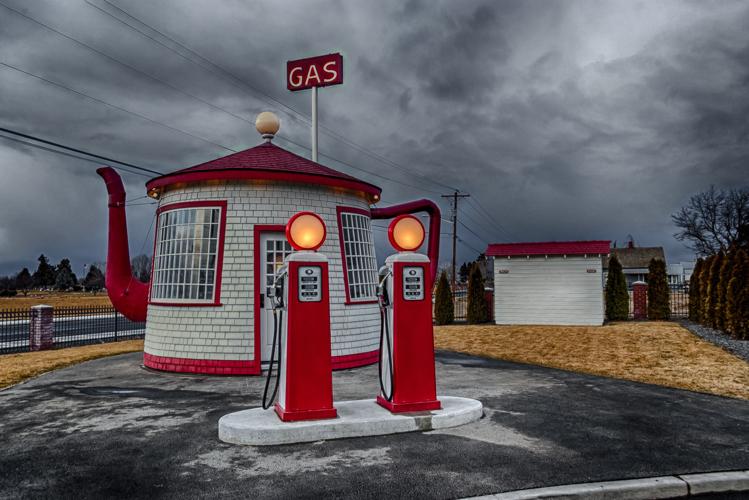
Today, Zillah is a city and part of Yakima County鈥檚 wine country, with the Teapot Dome Gas Station as the city鈥檚 visitors center and one of its better-known landmarks.






(0) comments
Comments are now closed on this article.
Comments can only be made on article within the first 3 days of publication.