



Two decades ago, very few people knew about data centers. The concept of artificial intelligence mostly existed as science fiction, a la the HAL 9000 computer in 鈥�2001: A Space Odyssey.鈥� And the touchscreen smartphone hadn鈥檛 been released yet.
The Central Washington town of Quincy was ahead of those trends, however, as Microsoft bought land there in 2006 for its Columbia Data Center.
Other companies including Dell and Yahoo soon followed, and today Quincy is one of the largest data center markets in the region.
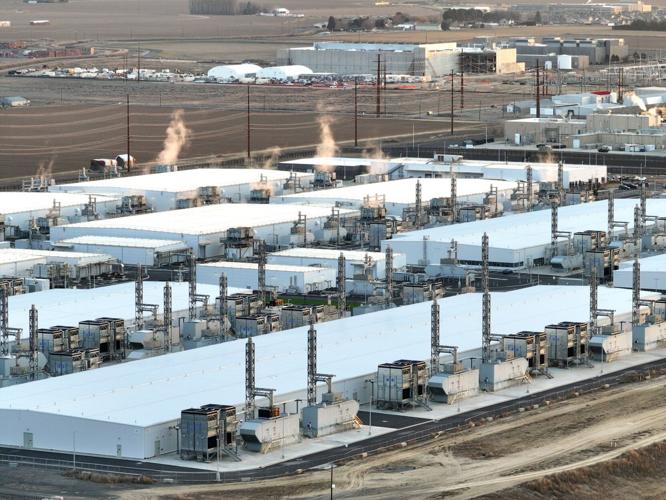
A February 2026 noted there are at least 27 data center buildings in and around Quincy, including four large, multi-building campuses owned by Microsoft, Sabey and H5.
The proliferation of data centers and their demands on water and electricity have become a nationwide and globally, with a Gallup poll earlier this month indicating 7 of 10 Americans oppose data center construction in their area.
But there鈥檚 also no doubt data center development brought investment, jobs and property tax revenue to Quincy.
Pat Haley, who served as Quincy鈥檚 city administrator for more than seven years, called the impact of data centers on the economy and public infrastructure in the Grant County community 鈥渕iraculous.鈥�
鈥淚鈥檓 telling you, it was a Quincy miracle,鈥� Haley, now serving as Sunnyside鈥檚 interim city manager, told the 黑料福利社. 鈥淚t was just amazing what happened there over a 15-year span."
Data centers "totally transformed the community into something that was very attractive for people to not only work there but now also to live there,鈥� he added.
Data centers first arrive in Central Washington
Haley, whose previous jobs include executive director of the Port of Douglas County in East Wenatchee and project engineer with Chelan County Public Utility District 1, said the initial data center expansion in Central Washington dates back to 2003.
That year, in the recently built Port of Chelan Confluence Technology Center, Yahoo rented an entire floor of the Wenatchee facility.
鈥淚t was kind of a big deal because this is what a data center was 鈥� just a room filled with servers,鈥� Haley said. 鈥淚t was the beginning of interest in Eastern Washington being used for data centers.鈥�
The Yahoo data center was soon followed by Sabey, a technology company out of Tukwila, Wash., which built a colocation facility near Pangborn Memorial Airport in East Wenatchee that leased data storage space to tenants.
These tenants included T-Mobile, Intuit and VMware, all of whom were players in the beginning of cloud computing and data storage, Haley said.
鈥淭hey flew in the corporate executives from T-Mobile who were coming from Germany. They had a big groundbreaking ceremony 鈥� I was part of the shovel/dig thing,鈥� Haley said. 鈥淒ave Sabey was the president of the company, he said this is just the tip of the iceberg. But of course in 2003 we had no idea.鈥�
It wasn鈥檛 long before technology companies began to look elsewhere in the region.
As the Port of Quincy described in its , 鈥淭he Role of Data Centers in Central Washington Economic Development,鈥� Microsoft and Yahoo contacted the Grant County Economic Development Council in 2005.
Site selectors from those two companies met with Port of Quincy, Grant County Public Utility District and City of Quincy representatives before buying land for data centers in 2006, the report noted. Microsoft bought 75.5 acres and Yahoo purchased 50 acres.
Microsoft opened its Columbia Data Center in 2007 on the west end of the city, and the boom was underway.
Today, there are at least 27 data center buildings in and around Quincy, including four large, multi-building campuses owned by Microsoft, Sabey and H5, according to a February 2026 report from the Columbia Riverkeeper environmental group.
What Quincy offers data centers
Both the Port of Quincy report and other analyses of the area鈥檚 data center boom point out three key ingredients the city has to offer: fiber optic internet lines, low-cost electricity and large parcels of available land.
By 2014, Central Washington counties featured the fastest fiber optic network in the nation, according to the Port of Quincy report, with 10 different companies providing fiber optic capacity and services in Quincy.
Electrical power was provided by the Grant County PUD at some of the lowest commercial rates in the U.S., the report noted.
鈥淪ince 2009, power rates in Grant County have been one-third the national average and one-half the state average,鈥� the report stated. 鈥淩eliable power at a fraction of the national cost is a powerful economic development tool.鈥�
It also can be a controversial one, as Haley noted while discussing the Quincy boom in data center.
Quincy-area farmers and residential customers were upset that data centers were taking advantage of the Grant County PUD鈥檚 low rates 鈥� even though industrial users such as data centers and food processors do pay more than double the residential power rates, Haley said.
鈥淪ome farmers think the data centers are taking all the power, and that the PUDs should be in existence specifically for the benefit of farmers. Well, that鈥檚 not the case 鈥� legally they can鈥檛 do that,鈥� Haley said.
鈥淚f you have a business that鈥檚 legitimate in that particular service area, the PUD can鈥檛 restrict who they sell their power to,鈥� he added. 鈥淚f a data center wanted to locate there, and is willing to pay the price and set up their operation, the PUD is obligated to sell the power.鈥�
The abundance of hydropower generated by the Columbia River and the fact that PUDs are public utilities instead of private, for-profit companies are the main reasons electricity is so affordable in Grant County, Haley said.
In fact, PUDs charging higher rates for large-scale industrial users goes against the usual economic and business concepts of volume discounts, he added.
鈥淭he more power they use, the more it costs them, and that kind of reverses the logic you normally have with bulk purchasing,鈥� Haley said.
He said the belief among some data center critics 鈥� that PUD power going to data centers could be sold on the open market to reduce electricity costs even further 鈥� is inaccurate.
鈥淧UDs can鈥檛 make money on their power. If they go to the open market to sell their power, it鈥檚 just to keep from having to borrow money for the improvements that are necessary in their system,鈥� Haley said.
鈥淭hey can go on the open market and sell their power at a higher rate, then have the capital to do those improvements. But they can鈥檛 have a big chunk of profits and lower the rate that way.鈥�
Recent power grid controversies
In fact, the Grant County PUD commissioners voted earlier this year to raise every customer鈥檚 electric rates to cover inflation鈥檚 effect on the cost of power grid components such as poles, wires and transformers, the .
The new rates, which took effect April 1, mean an average increase of 3.5% in 2026 for core customers such as residential, irrigation and small commercial/general service.
Large power-using customers such as data centers will see their rates increase by an average of 9.5% over the same period, the PUD announced.
Grant County PUD鈥檚 power rates per kilowatt hour for residential customers remain less than half of Washington state averages and about one-third of the national average, the PUD鈥檚 commissioners stated in the news release.
As the need for data center capacity and electricity usage continues to grow, Grant PUD and other power providers across Central Washington are looking to increase power line capacity.
Grant County PUD commissioners have approved a $260 million project that would provide six new transmission lines between Wanapum Dam on the Columbia River to the city of Quincy 31 miles north of the dam.
As The Seattle Times recently reported, data centers accounted for 37% of the electricity used in Grant County last year, and Grant PUD staff reported that data center growth fueled by the rise of artificial intelligence could increase the risk of outages and voltage instability across the grid.
The utility鈥檚 Quincy Transmission Expansion Plan, which would build the six new transmission lines, would double the amount of power that can be brought into Quincy from 372 megawatts to 750 megawatts, The Times reported.
Because Grant PUD cannot agree on a purchase price for some of the 112 parcels of land the new powers lines would cross, it has begun condemnation proceedings on some properties.
Landowners have asked a Grant County judge to throw out the utility鈥檚 petition to condemn the properties, stating the PUD failed to offer them just compensation for the land, the Times reported.
A decision on the landowners鈥� legal request has not yet been issued.
Water use 鈥� and reuse
Data centers rely on water to cool their infrastructure and prevent it from overheating.
Haley, the former Quincy city manager, noted that data centers use non-potable irrigation water, from sources such as the Columbia River. As data center designs have improved and evolved over the past two decades, most of the water can be reused, he said.
鈥淭he idea that (data centers) are big water consumers is inaccurate,鈥� Haley said. 鈥淭hey take the water and they cycle it through their system several times. The cooling occurs with the evaporation.鈥�
As the Environmental Protection Agency noted in a , Microsoft worked with the city of Quincy to construct the Quincy Water Reuse Utility, which treats cooling water from a Microsoft data center and recirculates it to the data center for the same purpose, reducing reliance on local potable groundwater.
This system not only reduces demands on surface and groundwater supply, it also provides a better cooling process because dissolved solids in groundwater can cause problems for a data center鈥檚 cooling system, the EPA reported.
鈥淭he water supplied from the Quincy Water Reuse Facility is of a more suitable quality for the data center鈥檚 cooling equipment than the conventionally treated, mineral-rich groundwater,鈥� the report stated. 鈥淭herefore, water recycling helps to lower the use of potable groundwater supplies in the region while supplying cooling water of a higher quality to the Microsoft data center.鈥�
Not everyone agrees with the EPA and the city of Quincy鈥檚 conclusions. In its , Columbia Riverkeeper states that AI-focused data centers will consume ever-greater amounts of water, a significant portion being eventually discharged as wastewater into public water systems.
鈥淓very year a 100-megawatt data center will consume 100 million gallons of water, enough for 2,500 people鈥檚 domestic use,鈥� the environmental group stated.
Columbia Riverkeeper also criticized the lack of regulatory obligations forcing data center owners and operators to track water use, making it difficult to track the impact of discharged water and the effect increased water use has on agriculture and local fisheries.
鈥淭he data center industry鈥檚 rising water use threatens water availability in drought-prone areas and places additional stress on the power system during critical periods,鈥� the organization鈥檚 recent report states. 鈥淪uch stress increases the chance that fish operations (at hydropower dams) will be interrupted, risking harm to Tribal treaty-protected salmon and steelhead.鈥�
Impacts on water from data centers, agricultural operations and other uses will be among the topics discussed Saturday, May 30, at the Northwest Toxic Communities Coalition鈥檚 annual summit meeting. The free online event is scheduled from 9 a.m. to 1 p.m.; for a complete agenda and registration, visit .







(1) comment
How come nobody comments on YHR articles any more?
Log in to reply
Comments are now closed on this article.
Comments can only be made on article within the first 3 days of publication.